
Honoré de Balzac On Coffee – A Terrible And Cruel Method
Coffee was central to prolific French writer Honoré de Balzac’s method of working.
Balzac is said to have consumed as many as 50 cups of coffee per day. It’s not surprising then that coffee may have played a significant role in Balzac’s death at age 51 in 1850.
Coffee helped fuel his writing binges that lasted 15 hours or more.
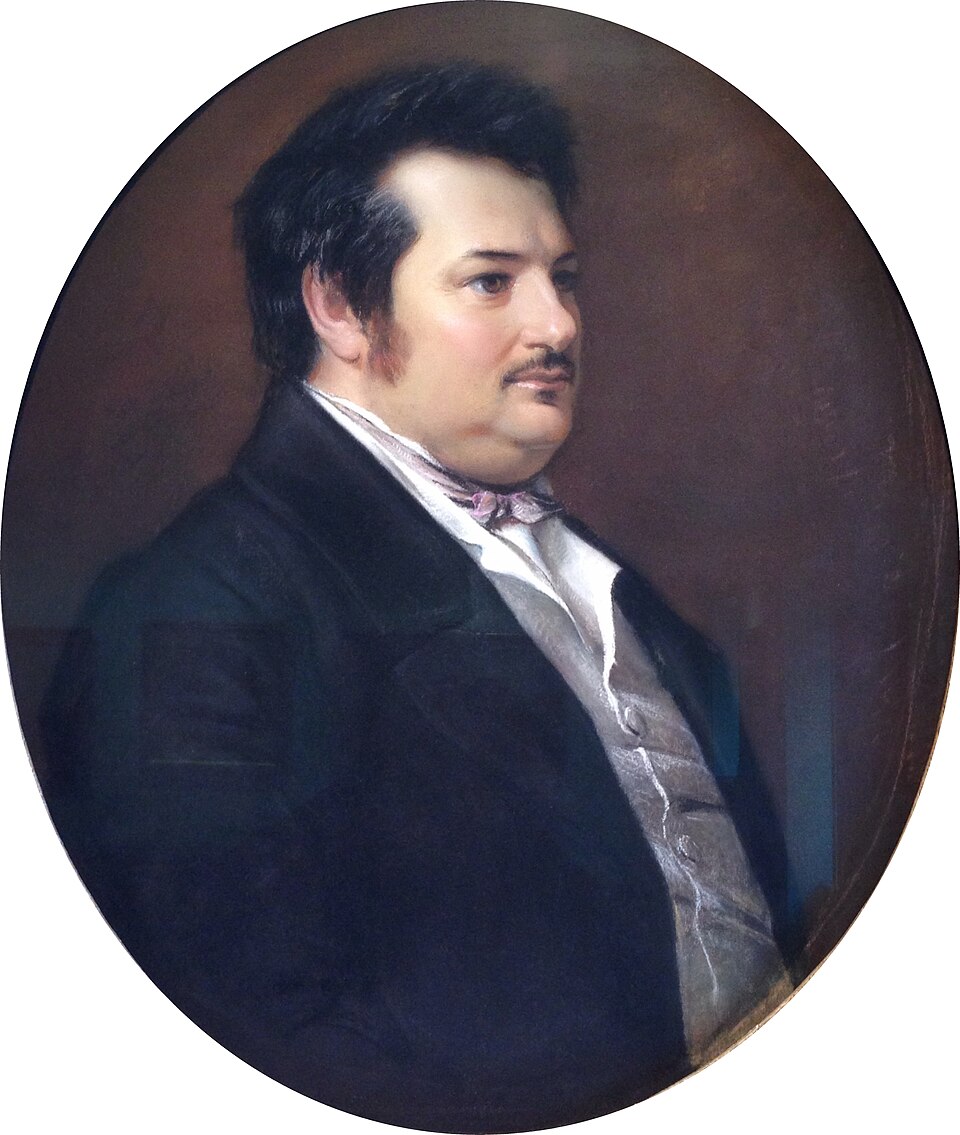
Jean Alfred Gérard-Seguin (1804-1872), Honoré de Balzac, pastel, musée des Beaux-Arts de Tours. Public Domain
Balzac wasn’t just the father of realism in European literature. He also fancied himself a philosopher. And he was very aware of the effects coffee and other common stimulants popular then and now have on the body and mind.
He wrote “Traité des excitants modernes, Treatise on Modern Stimulants”, about the societal impact of five commonly-used stimulants: tea, sugar, coffee, alcohol, and tobacco. Balzac’s stimulants treatise was published in 1839 as an appendix to “Physiologie du goût, The Physiology of Taste”, Jean Anthelme Brillat-Savarin’s landmark work of gastronomic philosophy, originally published in 1825.
Although what Balzac has to say about all five stimulants is interesting, especially about tobacco use, I’ll concentrate on what he has to say about coffee.
For this piece, I relied mainly on the 2018 annotated translation of “Blazac’s Treatise on Modern Stimulants” by Kassy Hayden, which was submitted as a thesis for a Master of Arts in Literary Translation Studies at the University of Wellington in New Zealand. Blazac’s words are in italic. Emphasis, where it appears, is mine.
https://www.academia.edu/110471429/Honor%C3%A9_de_Balzac_s_Treatise_on_Modern_Stimulants_An_Annotated_Translation
Coffee
On this subject, Brillat-Savarin is far from being complete. I can add to what he says about coffee because I consume it in such quantities that I have been able to observe its effects on a grand scale.
His latter statement lends some credence to the claim Balzac consumed up to 50 cups per day. He was fond of Turkish style coffee, which comes in small, but highly concentrated amounts in small cups.
Balzac knows that coffee does not provide inspiration to creative people, it merely “gets the blood moving by making the engine of the mind spring to life – an arousal that speeds up digestion, chases away sleep, and allows the brain to keep going a little longer.”
He was also well aware of what coffee can do to one’s innards.
“Coffee roasts your insides. Many people ascribe to coffee the power to provide inspiration, but everyone knows that the boring bore us even more after they have drunk it. Certainly, despite the fact that the grocery stores in Paris stay open until midnight, certain writers are not getting any wittier.”
Despite Balzac’s knowledge that frequent coffee use leads to resistance to caffeine (Its power is neither constant nor absolute) requiring greater and greater amounts to achieve the same the same levels of stimulation, he speaks of coffee and different preparation methods with reverence and details ways to prolong the effects of caffeine before resistance blunts its benefits.
Coffee acts on the diaphragm and the solar plexus, where it spreads to the brain via immeasurable emanations that escape all analysis; however, we can presume it is the fluids of the nervous system that conduct the electricity which this substance releases, and which it either finds or stimulates in our bodies. Its power is neither constant nor absolute. Rossini has personally experienced the effects that I have already observed on myself.
‘Coffee’s effects,’ he told me, ‘last only 15 to 20 days, which, fortunately, is the time it takes to write an opera.’
In cookbook-like style, Balzac lays out his preferred coffee-making methods and the effects produced by each method.
All of you leading lights, who burn the midnight oil, come close and listen to the gospel of alertness and intellectual effort!
1. Coffee ground using the Turkish method has more flavour than coffee ground in a coffee-mill.
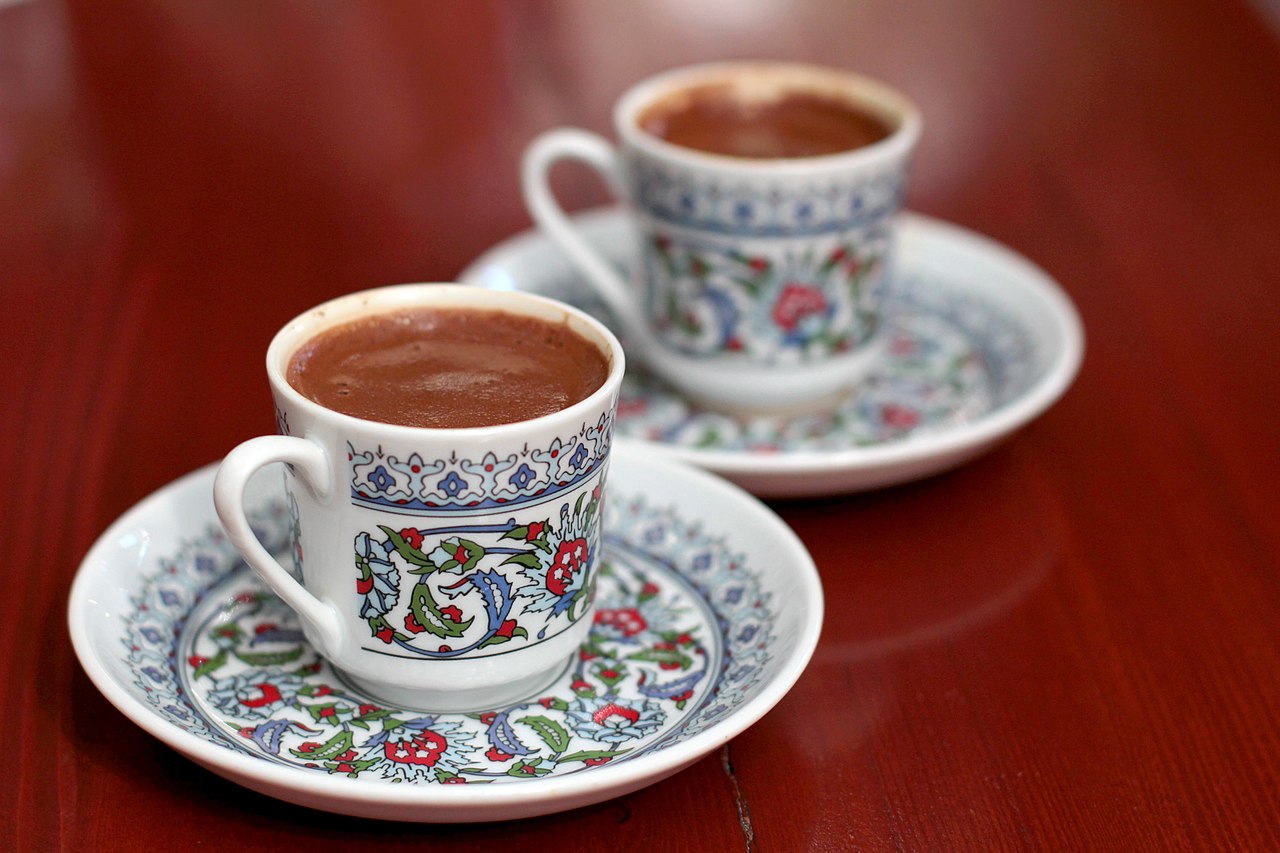
Two cups of Turkish coffee. Alet123 – Own work CC BY-SA 4.0
In many practical matters related to the exploitation of pleasure, the Orientals are far superior to the Europeans. Their natural disposition, being as observant as toads that spend years watching from their holes with their golden eyes like two suns open wide, has revealed to them what science shows us through analysis. The most harmful compound in coffee is tannin, a malignant substance that chemists have not yet fully studied. When the membranes in the stomach are tanned, or when the action of the tannin particular to coffee has stupefied them through too frequent use, they refuse to perform the violent contractions that workers require of them. This causes serious disorders if the connoisseur continues. There is a man in London whose immoderate use of coffee twisted him just like those old men knotted with gout.
I knew an engraver in Paris who took five years to recover from the state to which his love for coffee had reduced him. Lastly, an artist, Chenavard, recently died, his body burned. He used to walk into a café as a labourer walks into a tavern, at all hours. Coffee connoisseurs begin as with any passion: by degrees, and, as with Nicolet, they take stronger and stronger doses until they go too far. By grinding coffee, you pulverise it into molecules of strange shapes which retain the tannin and release only the aroma. This is why the Italians, the Venetians, the Greeks and the Turks can endlessly drink, and without causing themselves any harm, the coffee that the French consider to be a cafiot, a contemptuous word. Voltaire used to drink this kind of coffee.
2. Supposing that coffee is prepared in the immortal coffeepot invented by de Belloy, not du Belloy* (the man to whose meditations we owe this method was the distant cousin of the Cardinal, and, like him, from the very old and distinguished family of Marquis de Belloy), it has more virtue if it is infused with cold water than with boiling water. This is the second method for regulating its effects.
https://pootoogoo.wordpress.com/2015/02/15/elevator-to-espresso-episode-1/
By grinding the coffee, you release the aroma and the tannin at the same time, you whet the appetite and stimulate the solar plexus, which impacts on the thousands of capsules in the brain.
Thus, there are two grades: finely ground Turkish coffee, and milled coffee.
3. The strength of the coffee depends on the quantity placed in the upper receptacle, the fineness of the grind, and the amount of water used; this constitutes the third step in preparing coffee.
Using this method, over a period of one or two weeks at the most, you can become stimulated by one, then two cups, using increasing amounts of milled coffee infused with boiling water.
Over the course of another week, by cold infusion, by finely grinding the coffee, by crushing it into a powder and reducing the amount of water, you get another surge of brainpower.
When you arrive at the finest grind and the least amount of water possible, you then double the dose by taking two cups, with some robust constitutions managing three cups. In this way, you can draw out the effects a few days more.
“A terrible and cruel method”
Finally, Balzac describes what he calls a “a terrible and cruel method” of coffee consumption, “which I would recommend only to men of excessive strength with black, coarse hair, mottled vermillion and ochre skin, square hands and legs shaped like the balusters in the Palace Louis XV”.
“The (physical) description bears a remarkable resemblance to Balzac, and suggests that this is how he took his coffee,” Hayden says in a footnote.
If you fit this physical description and are sufficiently brave and/or foolhardy, then this method “involves the use of milled coffee, crushed, cold and anhydrous (a chemical word that means little or no water), taken on an empty stomach.”
This coffee falls into your stomach, which, as you know from Brillat-Savarin, is a velvety bag lined with suckers and papillae. The coffee, finding nothing, attacks this delicate and voluptuous lining, it becomes a kind of food that demands its juices; it wrenches at them, it solicits them like a prophetess, calling to her god, it assaults these lovely linings the way a cart-driver abuses young horses; the solar plexus is set alight, it blazes and shoots sparks up all the way to the brain.
From then on, everything becomes agitated: ideas march like the battalions of a great army onto the battlefield, where the battle has begun. Memories charge in, flags flying; the light cavalry of comparisons advances at a magnificent gallop; the artillery of logic rushes in with its convoy and its charges; witticisms appear like snipers; characters rise up; the paper covers itself in ink, because the evening begins and ends with torrents of black water, as the battle does with its gunpowder.
Should you not be a hairy man with the proper physical attributes, beware.
Balzac notes what happened when he recommended the “terrible and cruel method” to an unfit friend who absolutely, positively had to complete a project overnight:
I recommended this same beverage to one of my friends who absolutely had to complete a task by the next day: he thought he had been poisoned, he took to his bed, and he stayed abed like a bride. He was tall, with blond, sparse hair, a stomach like paper-maché, thin.
I should have been more observant.
Balzac: Coffee Wanted A Victim
The effects of terrible and cruel coffee can be overcome with diet, a lifestyle change and a small sartorial alteration, Balzac writes.
You would have to drink milky preparations, limit your diet to chicken and white meats; and, lastly, loosen your neckcloth, and return to the sauntering, carefree, itinerant, cryptogamic life of the insulated bourgeoisie.
Balzac also notes that extreme coffee consumption can induce a bad mood, something that apparently nearly cost him friends.
Under certain exceptional conditions, the state you are in when you drink coffee on an empty stomach produces a kind of nervous energy that resembles anger: your voice is raised, your gestures denote a pathological impatience; you want everything to get moving, your ideas race; you are antagonising, enraged for no reason; you embody the temperamental character of the poet who is so often condemned by grocers; you imagine others are as lucid as you feel. A man of intelligence would be wise to neither reveal himself nor let others approach.
Some friends, at whose country house I was staying, saw that I was bad-tempered and bellicose, hypocritical in conversation. The next day, I acknowledged my faults, and we sought the cause. My friends were learned men of the highest order, we had soon found it: coffee wanted a victim.
Coffee indeed found a victim in Balzac. It’s very likely coffee was a major contributor to the heart disease that killed him.
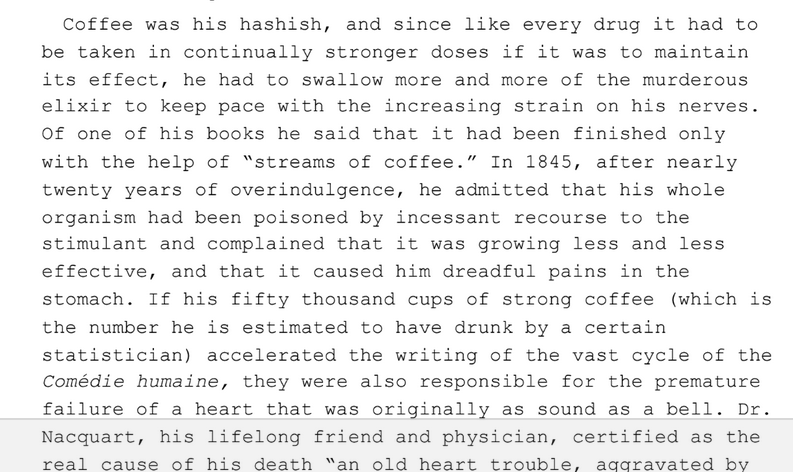
From “Balzac”, by Stefan Zweig, 1946, Viking Press, New York:
Honore de Balzac Books in Order
https://mostrecommendedbooks.com/series/honore-de-balzac-books-in-order
Books by Honoré de Balzac at Project Gutenberg
https://www.gutenberg.org/ebooks/author/251
Honoré de Balzac public domain audio books at LibriVox
https://librivox.org/author/86?primary_key=86&search_category=author&search_page=1&search_form=get_results&search_order=alpha
#####