
COVID-19 In El Paso The Plague
By Karen Strickholm
Aug 2, 2020 THE HOSPITALS OF PROVIDENCE MEMORIAL CAMPUS
August 2020 – “Contracted Covid-19. Bad. Sent to isolation COVID ward in El Paso (Texas) hospital, during that city’s peak pandemic moment – you may remember it in the national news. Spent one month in COVID acute care on 15 liters oxygen, mobile tractor trailer morgues out back, FEMA tents crammed into overflow spaces, Code Blue called near daily all around me, on bi-pap to breath. It’s touch and go. Too weak to stand, too weak to walk. In-dwelling foley installed, remaining in place for next three years.”
I have Covid-19……and all I want is sleep sleep sleep…
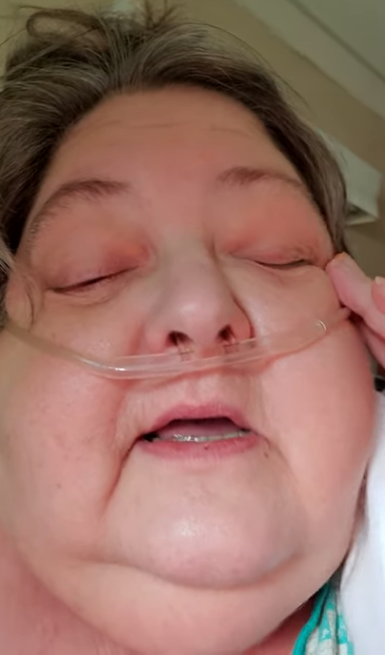
I have Covid-19… Aug 2, 2020 THE HOSPITALS OF PROVIDENCE MEMORIAL CAMPUS
Hello well i have coded people
i have the rona i’ve been transferred to a hospital here in el paso
i’m on a covet isolation ward this experience just gets more and more and more
evolved i guess anyway i’m still recovering from septic shock
and from pneumonia and now i have coveted so i’m becoming more and more
symptomatic and the infectious disease doctor said the next three days for me are critical so i’m just resting um they started me on rendezvous which they’re now using earlier on in
the coveted infection arc they’re finding out new things every day i mean the protocols here are changing
just constantly i don’t know if you can see these red eyes i have but this is another coveted symptom is
like a conjunctivitis kind of red eye but it’s just the lids swollen and stuff look for that to be added to the list of symptoms so i have the stomachache sore throat chills achy fatigue oh that stuff i just crashed so hard i’ve just somebody was doing something and i said i have to lay down and i heard someone say can i put a blanket on you and then the next thing i know it was a couple of hours later so um i’m a fighter and i’m fighting and that’s what’s up with me um what else did i want to share this is just an incredible experience you guys
08/02/20
Next Episode:
Covid-19 El Paso Quarantine Death On The Ward – 2020-08-25
Previously:
Karen Strickholm: A Will To Live When Health Issues Take Everything
About this series…
Karen Strickholm had a hidden brain tumor on pituitary gland. The tumor she didn’t know she had until she was about 50, wound up taking her health and all she had built in life. Her tumor, diagnosed in 2008, caused a tsunami of symptoms and eventually forced her into long-term care in a nursing home and a series of hospitals.This is America, the only developed nation that does not have universal healthcare, and the only developed nation where medical debt can force you into bankruptcy.
Karen became one of the financial statistics due to her medical debt, and the fact that she couldn’t get Medicare unless she was literally penniless.
What made Karen different from many other people was her relentless optimism and belief that she was going to get better, would walk out of the nursing home to build a new life. She was smart, a good writer and she left behind a number of digital artifacts, which have been collected into this series. Karen relates, in her own words, her journey through the American healthcare system and the reality living penniless in a nursing home long term.
Karen Strickholm died 6 April 2026 in a hospital in Albuquerque, New Mexico, of sepsis and pneumonia. She was 67.
This multimedia documentary series is her story.
Medical bankruptcy
• Approximately 66.5% of non-business personal bankruptcies in the U.S. were attributed to medical reasons in 2019.
• 1 in 10 U.S. adults (10.5 million) have experienced medical bankruptcy since 2001.
• 78% of bankrupt individuals in 2022 cited medical expenses as their primary cause.
• Medical bankruptcy rates increased by 21% from 2010 to 2020, even as overall bankruptcy rates declined
• The average interest rate on medical debt from bankruptcies is 21% (2022)
https://worldmetrics.org/medical-bankruptcies-statistics/
Nursing home stats
• On any given day, more than 1.3 million individuals receive care in a nursing home or skilled nursing facility, and a total of more than 4 million receive care each year.
• 6 out of 10 residents (64%) are short-stay patients who remain in a skilled nursing facility for an average of 25 days.
• Nearly four out of 10 residents (36%) are long-stay residents. These individuals often have multiple health conditions. Their average age is 76.
• Nursing homes employ about 1.5 million people.
• Nearly 90% are women, and 60% are people of color.
• One out of every five nursing home workers is an immigrant.
• There are around 15,000 nursing homes in the United States.
• The average size of a nursing home is 109 beds.
• Medicaid covers the cost of care for nearly two out of every three residents (63%).
https://www.ahcancal.org/Data-and-Research/facts/Pages/default.aspx