THE CARE & FEEDING OF YOU. FINAL TALE FROM THE NURSING HOME
By Karen Strickholm 03/21/2026
My motto ~ Never, ever give up.
Critical Illness can turn one into a human potato! Drugs. Pain. Fatigue. Low stimulation. Low movement.
Activities?
We do have a weekly visit from evangelicals, an assortment of coloring books, crafting with Popsicle sticks and glitter, the ubiquitous TV tuned to game shows and old sitcoms, plastic building blocks, a jigsaw puzzle of cats.
Many here have dementia, are nonverbal, non-ambulatory.
Video of Jacob Collier creating live
It is in this nursing home chain hellscape that I find myself (and, this is one of the better places). Emerging from this lengthy medical affair, I’m revving up for more life. Upping my “stim quotient” is a big piece of care and feeding, as it speeds up recovery in all domains. Some recent faves here…
For your spirit (above) ~ Who is this confident young man in electric orange pants, weaving and bobbing on this auditorium stage?
It’s Jacob Collier, musical polymath, discovered by no less than Quincy Jones. Collier composes music live with orchestra and audience. Prepare to be enchanted, so worth the watch! Bonus – Music critics are moved here, here and here.
A masterful, short (15 min.) tutorial on exactly how to use AI… I learned so much from this.
For your mind ~ What a time to be alive! We are living through truly cataclysmic days. Old structures are churning and burning. The media landscape is shifting dramatically. Unrest and instability are everywhere. What can one do to be ready?
Me, I’m using this down time to embrace AI. Check out the MIT Monk. He takes your hand in the gentlest of ways, and walks us through this short tutorial on understanding and using AI.
Dance like there’s no tomorrow!
Lastly, our brains quite literally work better when we move.
Physical therapy is not just about lifting weights and stretching colored bands (soooo boring). Even in a wheelchair, I can and do dance to stuff like this. It’s silly in all the right ways.
Give it a try, friends – Your body-brain axis will be so grateful.
I thank you so much for your participation in this journey – bearing witness is a powerful thing.
Next missive, will have survival strategies for stints in the nursing home, the practical stuff. With much love, Karen
PS: Victory! One of the nastiest wounds has completely healed! The others will be closed in just a few more weeks. My motto ~ Never, ever give up. 📣
PPS: Amuse Bouche… Death masks! Metal braces! Makeovers! Weird eyes! And with AI, how Marie Antoinette would appear were she to walk amongst us today… Enjoy!
Editor’s note:
This was Karen Strickholm’s last “missive,” as she called her stories.
Ten days after she published this missive to her mailing list she entered hospital, for what would be the final time, with sepsis and pneumonia.
Karen’s unflagging optimism inspires me, and kept me going during my own recent health issues. Right up to, and including, her last illness, Karen was in love with life and excited about the future. She even liked AI.
Karen never got to complete her ongoing tales from the nursing, which opened a window into a world no one wants to inhabit, but many of us will.
“It is in this nursing home chain hellscape that I find myself (and, this is one of the better places). Emerging from this lengthy medical affair, I’m revving up for more life,” she wrote in this final piece.
She had many words of wisdom, love and support and enjoyed the support of a huge community of people, many of whom never met her in person. She was grateful for these relationships and to be alive and she said so.
“I thank you so much for your participation in this journey – bearing witness is a powerful thing. Next missive, will have survival strategies for stints in the nursing home, the practical stuff. With much love, Karen.”
Her last words in her last missive: My motto ~ Never, ever give up.
My hand-made Karen Strickholm Emotional Support Chicken. I’ll treasure it always.
About this series…
Karen Strickholm had a hidden brain tumor on her pituitary gland. The tumor she didn’t know she had until she was about 50, wound up taking her health and all she had built in life. Her tumor, diagnosed in 2008, caused a tsunami of symptoms and eventually forced her into long-term care in a nursing home and a series of hospitals.
This is America, the only developed nation that does not have universal healthcare, and the only developed nation where medical debt can force you into bankruptcy.
Karen became one of the financial statistics due to her medical debt, and the fact that she couldn’t get Medicare unless she was literally penniless.
What made Karen different from many other people was her relentless optimism and belief that she was going to get better, would walk out of the nursing home to build a new life. She was smart, a good writer and she left behind a number of digital artifacts, which have been collected into this series. Karen relates, in her own words, her journey through the American healthcare system and the reality living penniless in a nursing home long term.
Karen Strickholm died 6 April 2026 in a hospital in Albuquerque, New Mexico, of sepsis and pneumonia. She was 67.
This multimedia documentary series is her story.
Medical bankruptcy
• Approximately 66.5% of non-business personal bankruptcies in the U.S. were attributed to medical reasons in 2019.
• 1 in 10 U.S. adults (10.5 million) have experienced medical bankruptcy since 2001.
• 78% of bankrupt individuals in 2022 cited medical expenses as their primary cause.
• Medical bankruptcy rates increased by 21% from 2010 to 2020, even as overall bankruptcy rates declined
• The average interest rate on medical debt from bankruptcies is 21% (2022)
https://worldmetrics.org/medical-bankruptcies-statistics/ Nursing home stats
• On any given day, more than 1.3 million individuals receive care in a nursing home or skilled nursing facility, and a total of more than 4 million receive care each year.
• 6 out of 10 residents (64%) are short-stay patients who remain in a skilled nursing facility for an average of 25 days.
• Nearly four out of 10 residents (36%) are long-stay residents. These individuals often have multiple health conditions. Their average age is 76.
• Nursing homes employ about 1.5 million people.
• Nearly 90% are women, and 60% are people of color.
• One out of every five nursing home workers is an immigrant.
• There are around 15,000 nursing homes in the United States.
• The average size of a nursing home is 109 beds.
• Medicaid covers the cost of care for nearly two out of every three residents (63%).
https://www.ahcancal.org/Data-and-Research/facts/Pages/default.aspx
Have you heard about NDEs? It means Near Death Experience, in which a person experiences “the other side” in some capacity.
Prior to my unfortunate incarceration in Ye Olde Nursing Home 🤣😂 I had several, and am ready to share the most impactful one now. For several years after, I could not speak about it. I didn’t have the words – If was too intense, too strange. Too foreign.
Ecstasy of St. Teresa in the Cornaro Chapel of the church of Santa Maria della Vittoria in Rome by Gian Lorenzo Bernini
I had just had a second brain surgery, to remove the tumor that grew back. For reasons unbeknownst to medicine, blood clots often form after brain surgery, and that’s what happened to me. Seventeen, to be exact. They all busted loose at once, and flew into my lungs rapid-fire, like Pacmen. Yikes!
Fortune often favors me, and did on this day, as my medical aide had just arrived when it happened. Rushed to the hospital, I was placed in Trauma Bay #1, reserved for the most serious, urgent cases.
The on-call doctor, another stroke of good luck, turned out to be a literal rocket scientist from Los Alamos, who had gotten bored with rockets and retrained as an ER doctor.
We are inside the “golden hour,” when people are most likely to be saved. Still, 17 blood clots to the lungs has a scary high mortality rate, well into the 90th percentile. Things are touch and go, as they fumble to insert IV lines, apply EKG sensors, inject clot-busting drugs.
While all these hands are upon me, there appears, a bit beyond the foot of my bed and up in the air, my deceased dog Annie Bananie. It’s clear as day, and I am transported into this other scene, the ER activity continuing in the background, low-grade noise in the distance.
I am so happy to see Annie! What a great dog she was. The vibe here is so chill, I feel so relaxed. As Annie and I look at each other, the picture slowly fills out.
First, a split rail fence extends out to either side, leaving a wide opening with Annie at the center, front paws right on the dividing line, as dogs are wont to do. Then, an endless field of tall, gently swaying grass and vibrant wild flowers appear, as far as the eye can see, glistening in the light.
NDE: Detail from of face Ecstasy of St. Teresa in the Cornaro Chapel of the church of Santa Maria della Vittoria in Rome by Gian Lorenzo Bernini
Next, in a leisurely stroll from the back of the field, comes a bunch of people – some relatives, like grandparents, aunts and uncles. Some deceased close friends. And some surprises, like my old boyfriend Jordy from my youth on Nantucket Island.
Hello Jordy! I am so touched he is there.
A few strangers. I somehow “know” they are my guardians in this lifetime, members of my “soul posse.”
I look at them. They smile at me. I know they are there to escort me over, through that proverbial veil to the other side. Just one step is all that is needed.
Thing is, I wasn’t sure I wanted to take that step. What ensued was a fairly lengthy conversation with myself… “Am I ready to go? I thought I was staying longer. So then why are they here? I thought I came in for a reason. I don’t know what that reason is, but I DO know I haven’t completed that purpose yet. Am I supposed to go now? Am I still committed to this important yet unknown mission? Why are they still standing there?”
I do know one thing for sure – they are awaiting my decision.
At this point, I decide to go with my gut – deep down, I know I am not done. I came in with a mission, and while I may not know what that mission is, I do know it is not accomplished. I throw up my right hand (because in New Jersey, we are hand talkers), and declare “I’m not f***ing ready to go!” Yes, I cursed at the light beings. But in a nice and kinda funny way. I am so comfortable with them!
They nod and smile with complete understanding.
There is more – What happened next was absolutely extraordinary. Life altering. From way, way back in the field to the left, a massive wave of PURE LOVE rushed towards me, a ginormous tornado of energy
It hit me so hard, it would have knocked me flat on my back, if I wasn’t already flat on that ER gurney. This wave of love shot through the very atoms of my body, through the spaces between electrons and neutrons. I was acutely aware of the porousness of “stuff.” After passing through the matter that is me, the love-tornado whipped around me several times, then faded back from whence it came.
Most religions have a term for this mystical experience – transverberation, religious ecstasy, wajd, piti, samādhi. Stunned by what just happened. I know what just occurred is extraordinary, a gift, a teaching, a reminder. The guardians nod and smile, gazing upon me with so much love, so much acceptance. The encounter feels complete. Gradually, the scene begins to recede, field, split rails, dog, people. Everything transitioned to black and white, finally dissolving into the ether.
Now I am back in Trauma Bay #1.
The doctor-rocket scientist and the medics are placing telemetry all over me, an IV is starting to drip more clot busters into my blood stream.
It is 8:45am.
I look around at all the people and machines and think to myself, “Well I stayed. Guess now, this adventure continues.” I am, and remain since that time, acutely aware I have chosen this life.
NDE Defeats Fear
In spite of all the travails since that NDE, and there have been many, I understand why I’m still here. Simply put, I decided. Looking from the outside, the road I’ve traveled since has been a hard one. Yet my orientation to illness, financial distress, immobility, isolation has been completely transformed.
While I often find myself in a Battle Royale to fend off death, I am no longer afraid of dying. The “posse” will return whenever I am ready. It’s so incredibly simple, dying is – just a mere step.
This reorientation has transformed how I navigate life. I feel so fortunate to be alive. Mostly, I have an inner tranquility – swinging more gently in the center swath of life’s ups and downs. I am less afraid. Gut instinct is my compass. While I still have some fear of pain while dying, I no longer fear death itself, not at all.
Why share this now?
One of the things I’ve recently learned, is that if there is a need to write something, on the quantum level there is already somebody who wants and needs to read it. I sincerely hope some of this has found it’s mark with you. 💞🤗💞 With much love, Karen
PS: And now for your Amuse Bouche… Knitting turned into porcelain!
About this series…
Karen Strickholm had a hidden brain tumor on her pituitary gland. The tumor she didn’t know she had until she was about 50, wound up taking her health and all she had built in life. Her tumor, diagnosed in 2008, caused a tsunami of symptoms and eventually forced her into long-term care in a nursing home and a series of hospitals.
This is America, the only developed nation that does not have universal healthcare, and the only developed nation where medical debt can force you into bankruptcy.
Karen became one of the financial statistics due to her medical debt, and the fact that she couldn’t get Medicare unless she was literally penniless.
What made Karen different from many other people was her relentless optimism and belief that she was going to get better, would walk out of the nursing home to build a new life. She was smart, a good writer and she left behind a number of digital artifacts, which have been collected into this series. Karen relates, in her own words, her journey through the American healthcare system and the reality living penniless in a nursing home long term.
Karen Strickholm died 6 April 2026 in a hospital in Albuquerque, New Mexico, of sepsis and pneumonia. She was 67.
This multimedia documentary series is her story.
Medical bankruptcy
• Approximately 66.5% of non-business personal bankruptcies in the U.S. were attributed to medical reasons in 2019.
• 1 in 10 U.S. adults (10.5 million) have experienced medical bankruptcy since 2001.
• 78% of bankrupt individuals in 2022 cited medical expenses as their primary cause.
• Medical bankruptcy rates increased by 21% from 2010 to 2020, even as overall bankruptcy rates declined
• The average interest rate on medical debt from bankruptcies is 21% (2022) https://worldmetrics.org/medical-bankruptcies-statistics/ Nursing home stats
• On any given day, more than 1.3 million individuals receive care in a nursing home or skilled nursing facility, and a total of more than 4 million receive care each year.
• 6 out of 10 residents (64%) are short-stay patients who remain in a skilled nursing facility for an average of 25 days.
• Nearly four out of 10 residents (36%) are long-stay residents. These individuals often have multiple health conditions. Their average age is 76.
• Nursing homes employ about 1.5 million people.
• Nearly 90% are women, and 60% are people of color.
• One out of every five nursing home workers is an immigrant.
• There are around 15,000 nursing homes in the United States.
• The average size of a nursing home is 109 beds.
• Medicaid covers the cost of care for nearly two out of every three residents (63%). https://www.ahcancal.org/Data-and-Research/facts/Pages/default.aspx
As a lily-white woman from northern New Jersey, this nursing home, with its many Navajo employees from the nearby reservation, is the closest I’ve ever been to the Diné world. It’s been an honor and a privilege.
Video of Navajo Life
There is so much grace to behold.
The Diné presence here is immersive. It’s heard in the native tongue spoken amongst Navajo nurses, aides, residents. The gentleness with elders, especially the Navajo ones. It’s in the sharing of childhood memories growing up on the reservation, family histories with tales of WW2 code talkers.
The turquoise and silver, the textiles. A vibrant media. Complex, intertwined familial relationships defined by the clan system. The history is rich and deep, some of it fraught.
Navajo Churro Sheep
I’ve learned about historic injustices, like the slaughter of sheep herds and the native boarding schools – two massive woundings to the collective psyche.
For half a millennium, the Diné had massive flocks of churro sheep, first brought to these lands by Christopher Columbus on his second voyage in 1493, followed by Hernán Cortéz in 1519, Francisco Vázquez de Coronado in the 1590s, and Juan de Oñate in 1598.
Navajo Woman and Infant, Canyon de Chelle, Arizona (Canyon de Chelly National Monument), 1933 – 1942 – NARA – Photo: Ansel Adams. Public Domain
Across high seas in wooden galleons, each introduced a genetically distinct breed with origins in various regions of Old Spain. Together, these four distinct breed lines merged to become the renowned Navajo Churro of the southwest.
In the 1930s, these massive herds were slaughtered without tribal permission because of “erosion.” Herds were reduced from over two million to less than 450 sheep by the 1970s. It’s a financial and cultural wound from which the Navajo people are still recovering.
Now, conservation efforts have revived the Navajo Churro, and herds are popping up all over the southwest, on and off the reservation. Churro wool is sold at local yarn shops for all kinds of fiber work, including a revival in the weaving of prized Navajo rugs.
Shot of long lines of children at the Native American boarding school
Video of Native American Boarding School
Another infamous chapter involved the federally funded Native American boarding schools. Many western tribes had their children “enrolled.” These facilities were established by FDR to exorcise all traces of Native American language and ways.
My nurse Manny was one such kid. Sent off at age 7, she spent 5 years in the boarding school system. While she has some happy memories of outings and sports, there is much bitterness too.
The boarding system was extremely rigid and militaristic, in every respect. When it was time to eat, all the kids (Navajo plus other tribes) had to form a single long line. Each child was identified not by their name, but by a number. Manny was number 59. When called, it meant she was to step forward to take her meal tray.
At night, they were sent en masse to the showers. After, Manny had to stand in line to be powdered, again stepping forward when her number was called. Manny still remembers this as a nightly ritual of ickiness – Shivering in her little 7-year old wet, chilled body in front of an uncaring school worker, the nightly powder was carelessly tossed all over her. Manny still remembers the clumps on her damp skin.
Get caught speaking Diné in the boarding school system? Lordy, that was bad, truly rough, she told me. Harsh punishments were common – hours on end standing in a corner, ceaselessly mopping long hallways in the huge buildings constructed to mainstream native children.
These days, Diné culture is thriving in cuisine, entertainment, design, media and American culture writ large. Diné youth study and uphold the old ways. Rite of passage ceremonies are still practiced, tribal leadership is highly engaged, and sweat lodges are commonplace.
Another example – The common practice of “smudging” or “saging” comes to us directly from the per-contact era. Sage bundles can now be purchased at Walmart. And “Dark Winds” is a hit police procedural on Netflix, based on Tony Hillerman’s popular book series following the Navajo Tribal Police in the 1970s.
The Diné influence is everywhere. Curious to know more? Try Yá’á-té’éh. It means “hello” in Diné. Always a good place to start. 💞
About this series…
Karen Strickholm had a hidden brain tumor on her pituitary gland. The tumor she didn’t know she had until she was about 50, wound up taking her health and all she had built in life. Her tumor, diagnosed in 2008, caused a tsunami of symptoms and eventually forced her into long-term care in a nursing home and a series of hospitals.
This is America, the only developed nation that does not have universal healthcare, and the only developed nation where medical debt can force you into bankruptcy.
Karen became one of the financial statistics due to her medical debt, and the fact that she couldn’t get Medicare unless she was literally penniless.
What made Karen different from many other people was her relentless optimism and belief that she was going to get better, would walk out of the nursing home to build a new life. She was smart, a good writer and she left behind a number of digital artifacts, which have been collected into this series. Karen relates, in her own words, her journey through the American healthcare system and the reality living penniless in a nursing home long term.
Karen Strickholm died 6 April 2026 in a hospital in Albuquerque, New Mexico, of sepsis and pneumonia. She was 67.
This multimedia documentary series is her story.
Medical bankruptcy
• Approximately 66.5% of non-business personal bankruptcies in the U.S. were attributed to medical reasons in 2019.
• 1 in 10 U.S. adults (10.5 million) have experienced medical bankruptcy since 2001.
• 78% of bankrupt individuals in 2022 cited medical expenses as their primary cause.
• Medical bankruptcy rates increased by 21% from 2010 to 2020, even as overall bankruptcy rates declined
• The average interest rate on medical debt from bankruptcies is 21% (2022)
https://worldmetrics.org/medical-bankruptcies-statistics/
Nursing home stats
• On any given day, more than 1.3 million individuals receive care in a nursing home or skilled nursing facility, and a total of more than 4 million receive care each year.
• 6 out of 10 residents (64%) are short-stay patients who remain in a skilled nursing facility for an average of 25 days.
• Nearly four out of 10 residents (36%) are long-stay residents. These individuals often have multiple health conditions. Their average age is 76.
• Nursing homes employ about 1.5 million people.
• Nearly 90% are women, and 60% are people of color.
• One out of every five nursing home workers is an immigrant.
• There are around 15,000 nursing homes in the United States.
• The average size of a nursing home is 109 beds.
• Medicaid covers the cost of care for nearly two out of every three residents (63%).
https://www.ahcancal.org/Data-and-Research/facts/Pages/default.aspx
Sometimes life moves in dizzying, impossible-to-predict zigzag lines. Turns out, healing unfolds in much the same way..
Before my medical crash and burn, I thought I had everything set up for a comfortable retirement – decades of savings; valuable investment properties in two attractive New Mexico towns – Santa Fe and Truth Or Consequences, the latter with hot springs and popular lake; a business with fabulous clients; a wide and diverse social network; multiple vehicles; and lots of “stuff.”
Bwhahahahahaha!!! 😂😂🤣😂
🎶🎵🎶 Coldplay’s joyous “Every Teardrop Is A Waterfall” with gorgeous lyrics – “Don’t want to see another generation drop, I’d rather be a comma than a full stop, Maybe I’m in the black, maybe I’m on my knees, Maybe I’m in the gap between the two trapezes, But my heart is beating and my pulses start, Cathedrals in my heart.”
What happened?
My life went into a steep and scary decline. I lurched around from one life-threatening medical and financial crisis to the next. Then, when septic shock struck several years ago, the tent poles collapsed and this latest drawn-out battle began.
A quick recap of the darkest days –
Karen Strickholm fighting the good fight.
Brain tumor and brain surgery (twice); massive pulmonary emboli shower, injuring pulmonary artery; nasty early Covid-19 followed by Long Covid; multiple bouts of pneumonia causing scarred and collapsed lungs; a dozen+ UTIs requiring hospitalization; intermittent kidney failure; cellulitis (a painful infection of the skin); countless other infections my battered immune system could not fight off, like RSV; paralysis (!!!) from the neck down for over a year; nasty chronic wounds on the back of my legs, still struggling to heal; a metabolic malfunction from TBI causing enormous weight gain; PTSD, anxiety and depression; chronic pain; weeks upon weeks in the hospital, and more. 😱 Yeesh!
Medical bills
As illness overwhelmed me, so too did medical bills.
I earned too much and owned too much to receive any government aid whatsoever, like Medicaid. The bills were astronomical. Even with excellent insurance, I faced medical debt equaling the cost of a small home.
A catch-22 – the only way to get the care I needed was to own nothing. Zero, zip, nada. No houses, even the one I lived in. No valuables, and never more than $2k in the bank, per law.
It had become increasingly difficult to manage things like tenants and consulting work. Ultimately, I declared medical bankruptcy, and poof, there went the last of my assets.
Then, an unexpected turn for the better!
Looks like I’m not checking out anytime soon, after all. Much to my surprise, this battered jalopy of a body is bouncing back, slowly and in zigzag formation, but surely.Consequently, I’ve moved from battle stance to reconstruction.
So much good is happening…I’m no longer paralyzed! 🎊 🥳🎉
Immuno support drugs have helped enormously, so infections are down. While I’ll always need to deal with damage that nasty tumor did to my HPA (the pentium chip that runs the entire body, no less), effects of that TBI have stabilized.
Supplemental oxygen use dropped greatly (which they say never happens). Heart is strong – the cardiologist doesn’t even want to see me for a year. This body is demanding to move, stretch, do stuff. And, it’s sending clearer signals for what it wants and needs.
This blessing of a rebirth is a full-on chance to start over, albeit with some disabilities. I find myself before this vast empty space, scared and excited. Other than some stuff in that storage unit, I own nothing. I am officially disabled, with some benefits like Medicaid (for now anyway, but grrrr, the BB Bill). I have almost nothing, but am also free of obligations.
I haven’t worked in several years (miss it), and while full-time employment might be a bridge too far, part-time gigs are an option. Or, head off in an entirely new professional direction?
Plus all the other options – where to live? It would be easy for me to go anywhere in the world, preferably with lower altitude, as long as there are hospitals and specialty medical care within reach. And, a state that accepts “Obamacare” funds for state-run Medicaid.
Also, there is the rebuilding those other pieces of life – Maybe revisit that bucket list? Serve various causes I care about? Create some new adventures?
As a person who loves a clear goal 🏹🎯, it’s darn uncomfortable to be so rudderless. I have no clear plans. Everything I come up with feels inauthentic. But one thing’s for sure – I fought like a champion to stay here, and I’m not giving up now.I am left dwelling in that question – What’s next? I could have decades yet to live. Maybe.
The extent of my recover is a huge unknown. For now, I’m watching for clues on where to aim myself in this third era. Possibly, the answers will come in a dream, or from one of you. I’m open to suggestions! My cosmic antennae are fully extended. 📡I’ll keep you posted here. This is gonna be exciting.
Thank you for following my story and for your financial support, it means so much to me, and makes such a huge difference. 🙏💞 Next missive, I’ll return to more tales of nursing home shenanigans.With much love, Karen 💞🥰💞
PS: Your Amuse Bouche – Enjoy this clip of my favorite new stand-up comedy performer, Josh Johnson. His star is rising fast, definitely one to watch.
About this series…
Karen Strickholm had a hidden brain tumor on pituitary gland. The tumor she didn’t know she had until she was about 50, wound up taking her health and all she had built in life. Her tumor, diagnosed in 2008, caused a tsunami of symptoms and eventually forced her into long-term care in a nursing home and a series of hospitals.
This is America, the only developed nation that does not have universal healthcare, and the only developed nation where medical debt can force you into bankruptcy.
Karen became one of the financial statistics due to her medical debt, and the fact that she couldn’t get Medicare unless she was literally penniless.
What made Karen different from many other people was her relentless optimism and belief that she was going to get better, would walk out of the nursing home to build a new life. She was smart, a good writer and she left behind a number of digital artifacts, which have been collected into this series. Karen relates, in her own words, her journey through the American healthcare system and the reality living penniless in a nursing home long term.
Karen Strickholm died 6 April 2026 in a hospital in Albuquerque, New Mexico, of sepsis and pneumonia. She was 67.
This multimedia documentary series is her story.
Medical bankruptcy
• Approximately 66.5% of non-business personal bankruptcies in the U.S. were attributed to medical reasons in 2019.
• 1 in 10 U.S. adults (10.5 million) have experienced medical bankruptcy since 2001.
• 78% of bankrupt individuals in 2022 cited medical expenses as their primary cause.
• Medical bankruptcy rates increased by 21% from 2010 to 2020, even as overall bankruptcy rates declined
• The average interest rate on medical debt from bankruptcies is 21% (2022) https://worldmetrics.org/medical-bankruptcies-statistics/ Nursing home stats
• On any given day, more than 1.3 million individuals receive care in a nursing home or skilled nursing facility, and a total of more than 4 million receive care each year.
• 6 out of 10 residents (64%) are short-stay patients who remain in a skilled nursing facility for an average of 25 days.
• Nearly four out of 10 residents (36%) are long-stay residents. These individuals often have multiple health conditions. Their average age is 76.
• Nursing homes employ about 1.5 million people.
• Nearly 90% are women, and 60% are people of color.
• One out of every five nursing home workers is an immigrant.
• There are around 15,000 nursing homes in the United States.
• The average size of a nursing home is 109 beds.
• Medicaid covers the cost of care for nearly two out of every three residents (63%). https://www.ahcancal.org/Data-and-Research/facts/Pages/default.aspx
Emotional Support Chickens, Theft! Cluck Yeah, A NURSING HOME TALE
By Karen Strickholm 09/26/2024
Sweeping the knitting world! Tens of thousands of “emotional support chickens” are flying off knitters’ needles, bringing inordinate joy to recipients. Here’s a tale about one of them.
Meet Shannon, a fiesty resident. Shannon doesn’t speak much, other than to holler “Bitch! Whore! Nooo! I hate you!” I figured, she could probably use an emotional support chicken, right?
Made her one in her favorite color – purple. Popped a jingle bell on the tail. Little did I anticipate the drama to ensue.
Emotional Support Chickens
Initial presentation? Didn’t go too well.
“Close your eyes, Shannon, we have a present for you!”
“Fuck you!” But we persist. “Take it Shannon! It’s special! It’s for you! It’s your favorite color!”
Once in hand, her eyes sparkle. Off she rolled, arms wrapped around the thing.
Shannon and her emotional support chicken
BUT THEN. The very next day Mary, our house kleptomaniac, STOLE the chicken!
Mary steals other people’s food. Your pen. Supplies from the activities cart. Small objects she can squirrel away. Money. When confronted about lifting the chicken, she retorted “It’s OK, she doesn’t use it.” Heh heh.
After Mary fell asleep, intrepid aide Henry tip-toed into her room, snatched the chicken back. We decided to let it overnight in my room, for re-gifting the next day.
Next morning, emotional support chicken was re-presented to Shannon. Her whole face lit up!
With out-stretched arms, she brought her chicken close in for a kiss and a snuggle. Clearly, a bond was forming. She clung to it all day.
Next morning, emotional support chicken was re-presented to Shannon
But THEN! Next day, purple chicken got stolen AGAIN!! This time, Ramona was the culprit. We discovered it, proudly displayed on her bed.
Aide Karina stole the well-traveled bird back, then it was re-re-presented to Shannon. This time, she reached out for it and shouted, “My chicken!”
Chicken security has been hardened. Oh, and turns out per Shannon, his pronouns are he/his/hey you, and his name is Pedro. 🐓
/fin
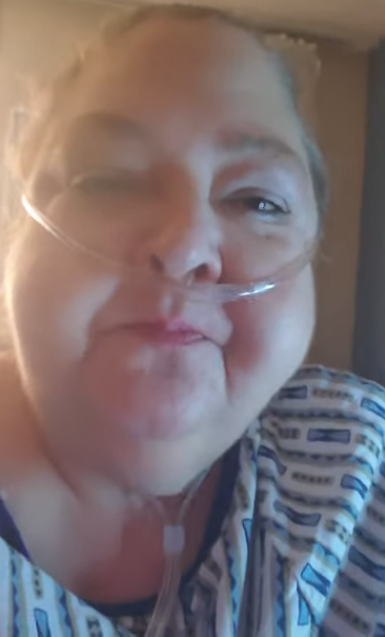
(Shot of me above with steroid-bloated chipmunk face)
About this series…
Karen Strickholm had a hidden brain tumor on her pituitary gland. The tumor she didn’t know she had until she was about 50, wound up taking her health and all she had built in life. Her tumor, diagnosed in 2008, caused a tsunami of symptoms and eventually forced her into long-term care in a nursing home and a series of hospitals.
This is America, the only developed nation that does not have universal healthcare, and the only developed nation where medical debt can force you into bankruptcy.
Karen became one of the financial statistics due to her medical debt, and the fact that she couldn’t get Medicare unless she was literally penniless.
What made Karen different from many other people was her relentless optimism and belief that she was going to get better, would walk out of the nursing home to build a new life. She was smart, a good writer and she left behind a number of digital artifacts, which have been collected into this series. Karen relates, in her own words, her journey through the American healthcare system and the reality living penniless in a nursing home long term.
Karen Strickholm died 6 April 2026 in a hospital in Albuquerque, New Mexico, of sepsis and pneumonia. She was 67.
This multimedia documentary series is her story.
Medical bankruptcy
• Approximately 66.5% of non-business personal bankruptcies in the U.S. were attributed to medical reasons in 2019.
• 1 in 10 U.S. adults (10.5 million) have experienced medical bankruptcy since 2001.
• 78% of bankrupt individuals in 2022 cited medical expenses as their primary cause.
• Medical bankruptcy rates increased by 21% from 2010 to 2020, even as overall bankruptcy rates declined
• The average interest rate on medical debt from bankruptcies is 21% (2022)
https://worldmetrics.org/medical-bankruptcies-statistics/ Nursing home stats
• On any given day, more than 1.3 million individuals receive care in a nursing home or skilled nursing facility, and a total of more than 4 million receive care each year.
• 6 out of 10 residents (64%) are short-stay patients who remain in a skilled nursing facility for an average of 25 days.
• Nearly four out of 10 residents (36%) are long-stay residents. These individuals often have multiple health conditions. Their average age is 76.
• Nursing homes employ about 1.5 million people.
• Nearly 90% are women, and 60% are people of color.
• One out of every five nursing home workers is an immigrant.
• There are around 15,000 nursing homes in the United States.
• The average size of a nursing home is 109 beds.
• Medicaid covers the cost of care for nearly two out of every three residents (63%).
https://www.ahcancal.org/Data-and-Research/facts/Pages/default.aspx
Welcome to this re-imagined communique, designed to update, entertain and inform you monthly! Find tales from the inside – funny, moving, shocking, thought-provoking. Also, tips on navigatiing America’s long term care jalopy, and fun tidbits, like the sketch comedy bit below.
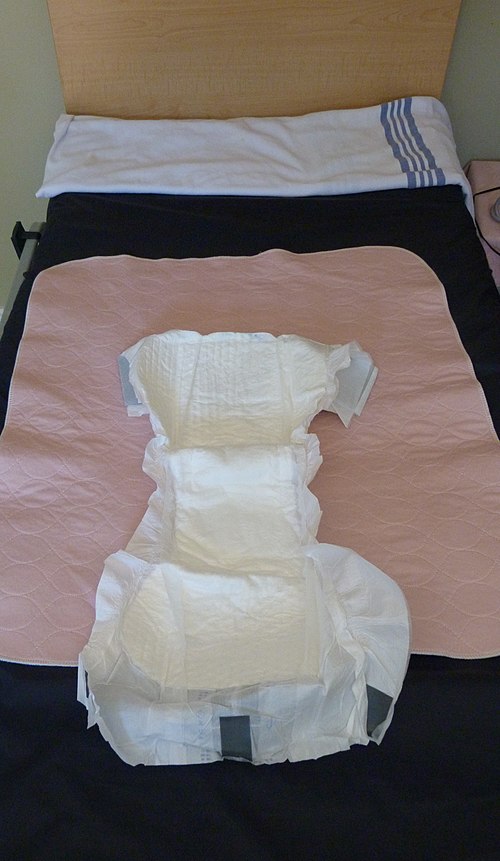
Today we talk about being naked. Matt and Anthony, two very young students training to become nurse’s aides (CNAs), are assigned to put on an “adult brief” (as it’s euphemistically called) on me, a transitional tool needed since graduating from a bladder foley.
“WRONG Anthony, put that HERE,” Matt instructs, pointing to the pad he’s just positioned in the crease between my leg and my hoo-ha on his side. I’m laying flat between them, stark naked, legs splayed open in dissected frog position.
👇👇👇 More 👇👇👇
“It doesn’t go there, MATT. It’s supposed to be like THIS,” Anthony retorts with full distain. A young buck epic clashing of the antlers is raging above me. The struggle is real. I however am incidental.
Other than this cleaning and diapering of my nether parts, my hoo-ha is of zero interest to them. The application of this brief, however, is EVERYTHING.
The pads now positioned, the boys are wrestling over who gets to roll a pillow case like a bandana, destined for under my belly to prevent chafing.
👇👇👇 More 👇👇👇
FACTOID: One in four of you will be spending some significant time in a nursing home.
Anthony seizes the reins: “I’LL DO IT,” ripping the pillow case out of Matt’s hands. Matt stands momentarily defeated, but maneuvers fast to grab the brief.
“I’ve got this Anthony, LET GO OF IT,” he sneers. Matt may still have braces and teenage acne, but he’s nobody’s bitch.
We learn to savor these psychodramas that regularly unfold in these joints – it’s entertainment. Modesty is long gone. Your input is not required. You are reduced in these scenarios to a sack of flesh and bones.
👇👇👇 More 👇👇👇
The task is finally done, crooked but I’ll take it.
“Thanks guys!” I say to their backs.
The Clash Of The Titans, Chapter Whatever, is over. On to the next room and naked broken body.
Get used to it – In and out comes this veritable parade of CNAs, nurses, med techs, wound care folks, doctors, physician assistants, nurse practitioners, occupational and physical therapy, business office to collect money. So many people!
All in a rush, overworked, underpaid, Doing their best to navigate a hopelessly tangled bureaucracy in which profit sits at the helm, not the patients.
It’s remarkable. It’s barely managed chaos, and inside that frame, you are gonna have to get naked at some point with them all.
/fin
2024 – Another challenge with angry lungs, this time afflicted with Covid plus RSV plus pneumonia plus bilateral lower lung collapse. Then kidney stones. By holiday season am stabilized. Sleep, a lot. Steroids at long last lowered. Wounds start to heal. Accomplish standing yet again.
About this series…
Karen Strickholm had a hidden brain tumor on her pituitary gland. The tumor she didn’t know she had until she was about 50, wound up taking her health and all she had built in life. Her tumor, diagnosed in 2008, caused a tsunami of symptoms and eventually forced her into long-term care in a nursing home and a series of hospitals.
This is America, the only developed nation that does not have universal healthcare, and the only developed nation where medical debt can force you into bankruptcy.
Karen became one of the financial statistics due to her medical debt, and the fact that she couldn’t get Medicare unless she was literally penniless.
What made Karen different from many other people was her relentless optimism and belief that she was going to get better, would walk out of the nursing home to build a new life. She was smart, a good writer and she left behind a number of digital artifacts, which have been collected into this series. Karen relates, in her own words, her journey through the American healthcare system and the reality living penniless in a nursing home long term.
Karen Strickholm died 6 April 2026 in a hospital in Albuquerque, New Mexico, of sepsis and pneumonia. She was 67.
This multimedia documentary series is her story.
Medical bankruptcy
• Approximately 66.5% of non-business personal bankruptcies in the U.S. were attributed to medical reasons in 2019.
• 1 in 10 U.S. adults (10.5 million) have experienced medical bankruptcy since 2001.
• 78% of bankrupt individuals in 2022 cited medical expenses as their primary cause.
• Medical bankruptcy rates increased by 21% from 2010 to 2020, even as overall bankruptcy rates declined
• The average interest rate on medical debt from bankruptcies is 21% (2022)
https://worldmetrics.org/medical-bankruptcies-statistics/ Nursing home stats
• On any given day, more than 1.3 million individuals receive care in a nursing home or skilled nursing facility, and a total of more than 4 million receive care each year.
• 6 out of 10 residents (64%) are short-stay patients who remain in a skilled nursing facility for an average of 25 days.
• Nearly four out of 10 residents (36%) are long-stay residents. These individuals often have multiple health conditions. Their average age is 76.
• Nursing homes employ about 1.5 million people.
• Nearly 90% are women, and 60% are people of color.
• One out of every five nursing home workers is an immigrant.
• There are around 15,000 nursing homes in the United States.
• The average size of a nursing home is 109 beds.
• Medicaid covers the cost of care for nearly two out of every three residents (63%).
https://www.ahcancal.org/Data-and-Research/facts/Pages/default.aspx
Today, I will tell you the tale of Maria. But first, a quick word about these missives.
Why do I write them?
Mainly, I want to share with you what life is really like in a nursing home. One out of four of you will be clocking some time here, after all. Yet most know little or nothing about it. Life can be hysterically funny, moving, inspirational, and yes, often horrifying. You will need some mad skills to survive and thrive when your turn comes, and so will your loved ones.
I hope to help with that.
Karen, fighting the good fight.
Second, sadly the public “safety net” is filled with holes.
Nursing homes are a patchwork system, based on models from the last century, run almost entirely by investment bankers – the same people running our prisons, and with many similarities. Hence, there is a fundraising component here.
Lastly, this life experience has evolved into a spiritual journey, as well as a medical one.
What has my life amounted to thus far? How do I recover from this extended traumatic experience? How to better co-create with the divine? How best to serve?
Deep inquiry indeed, and of value to share.
And now, on to the tale of roommate Maria…
Families here in New Mexico tend to be large sprawling networks, and Maria belongs to one of them. She and her mom are a local crack-dealing team at the street level, obtaining wares from cartel connections for their cottage enterprise.
In these joints, you get what you get as a roommate. If you are in a mainly publicly funded place, which most are, you’ll be sharing space with all sorts. Maria was with me for just a few months, recovering from an amputation. During that time, she was hard at work trying to win visitation rights for her son, whom she loved very much.
Why no visitation? Welp. That’s a story! A while back, Maria came to fisticuffs with the other baby mama of her son’s baby daddy. During the battle, that baby mama got the upper hand, and dragged Maria aways down a dirt road, scraping her heel in the process.
Due to the drugs and diabetes and whatnot, Maria’s foot had to be partially amputated. Due to more drugs and lack of proper wound care, the amputation site became badly infected. A second amputation at the ankle ensued.
Did Maria learn anything from this?
No, because she changed nothing after the second cut (par-tay!! 🍻🪅🥳) which resulted in – you guessed it – a third amputation, this time mid-calf.
When she left the hospital, she was assigned to my room.
As a roommate she was easy to be with – cheerful, funny and entertaining.
She shared freely about her life, her plans, her incessant craving for Taki’s. I had received a bunch of sample lipsticks earlier, and laid them on her. She got such a kick out of doing her lips, burning through multiple tubes in under a month.
Maria had twitchy energy, patrolling the halls, rolling outside for a smoke. Periodically she’d disappear into our shared bathroom to vape some weed. It’s legal here in New Mexico, but cannot be used at nursing homes that receive federal funding like Medicare or Medicaid, which is most of them.
For me, these extended bathroom visits fell squarely in the category of see no evil. If I were Maria, I’d be vaping weed too.
Learning to walk on her fancy new artificial leg, Maria trekked the hallways to practice, playing and sparring with staff, most of whom knew Maria and her tribe from around town.
Know that here in New Mexico, Maria’s story is not an anomaly but the norm.
Chronic poverty and drugs are a toxic brew. Don’t think I didn’t see the crushed spirit underneath all that acting out and addiction. The grief of losing her baby, no matter the cause. The hopelessness. The inability to shift course. Sharing lipstick and food was the best I could do.
A lingering memory – One afternoon, wall-shakingly loud rock and roll thundered down the hallway…
“What’s that?”
“Oh just Maria. She brought her boombox into the shower.”
I still think of her often, and send her blessings.
end
And now, here is your AMUSE BOUCHE, Carl Sagan’s Pale Blue Dot…
About this series…
Karen Strickholm had a hidden brain tumor on her pituitary gland. The tumor she didn’t know she had until she was about 50, wound up taking her health and all she had built in life. Her tumor, diagnosed in 2008, caused a tsunami of symptoms and eventually forced her into long-term care in a nursing home and a series of hospitals.
This is America, the only developed nation that does not have universal healthcare, and the only developed nation where medical debt can force you into bankruptcy.
Karen became one of the financial statistics due to her medical debt, and the fact that she couldn’t get Medicare unless she was literally penniless.
What made Karen different from many other people was her relentless optimism and belief that she was going to get better, would walk out of the nursing home to build a new life. She was smart, a good writer and she left behind a number of digital artifacts, which have been collected into this series. Karen relates, in her own words, her journey through the American healthcare system and the reality living penniless in a nursing home long term.
Karen Strickholm died 6 April 2026 in a hospital in Albuquerque, New Mexico, of sepsis and pneumonia. She was 67.
This multimedia documentary series is her story.
Medical bankruptcy
• Approximately 66.5% of non-business personal bankruptcies in the U.S. were attributed to medical reasons in 2019.
• 1 in 10 U.S. adults (10.5 million) have experienced medical bankruptcy since 2001.
• 78% of bankrupt individuals in 2022 cited medical expenses as their primary cause.
• Medical bankruptcy rates increased by 21% from 2010 to 2020, even as overall bankruptcy rates declined
• The average interest rate on medical debt from bankruptcies is 21% (2022) https://worldmetrics.org/medical-bankruptcies-statistics/ Nursing home stats
• On any given day, more than 1.3 million individuals receive care in a nursing home or skilled nursing facility, and a total of more than 4 million receive care each year.
• 6 out of 10 residents (64%) are short-stay patients who remain in a skilled nursing facility for an average of 25 days.
• Nearly four out of 10 residents (36%) are long-stay residents. These individuals often have multiple health conditions. Their average age is 76.
• Nursing homes employ about 1.5 million people.
• Nearly 90% are women, and 60% are people of color.
• One out of every five nursing home workers is an immigrant.
• There are around 15,000 nursing homes in the United States.
• The average size of a nursing home is 109 beds.
• Medicaid covers the cost of care for nearly two out of every three residents (63%). https://www.ahcancal.org/Data-and-Research/facts/Pages/default.aspx
THE NURSING HOME CONFESSIONAL, A NURSING HOME TALE
By Karen Strickholm 05/01/2025
THE NURSING HOME CONFESSIONAL
Here is a powerful nursing home story I will never, ever forget. Please allow me to set the stage for you…
Day-to-day nursing home reality is alien territory for most folks. The early days “on the inside” are a particularly disjointed time. The new “resident” has just come through a medical crisis that spit them out into this strange new land. The psychological vertigo is very real, inviting deep reflection.
Maybe that’s why there can, early on, be the phenomenon of a “confessional” – a raw telling of one’s life story to another. This event has a formal, structured quality, akin to the telling of tribal tales around campfires of old, or the laying bare of truths with a priest. It is distinctly sacred.
The nursing home resident’s role is to tell their story.
My job is to powerfully listen. It can take minutes, or hours.
THE NURSING HOME CONFESSIONAL
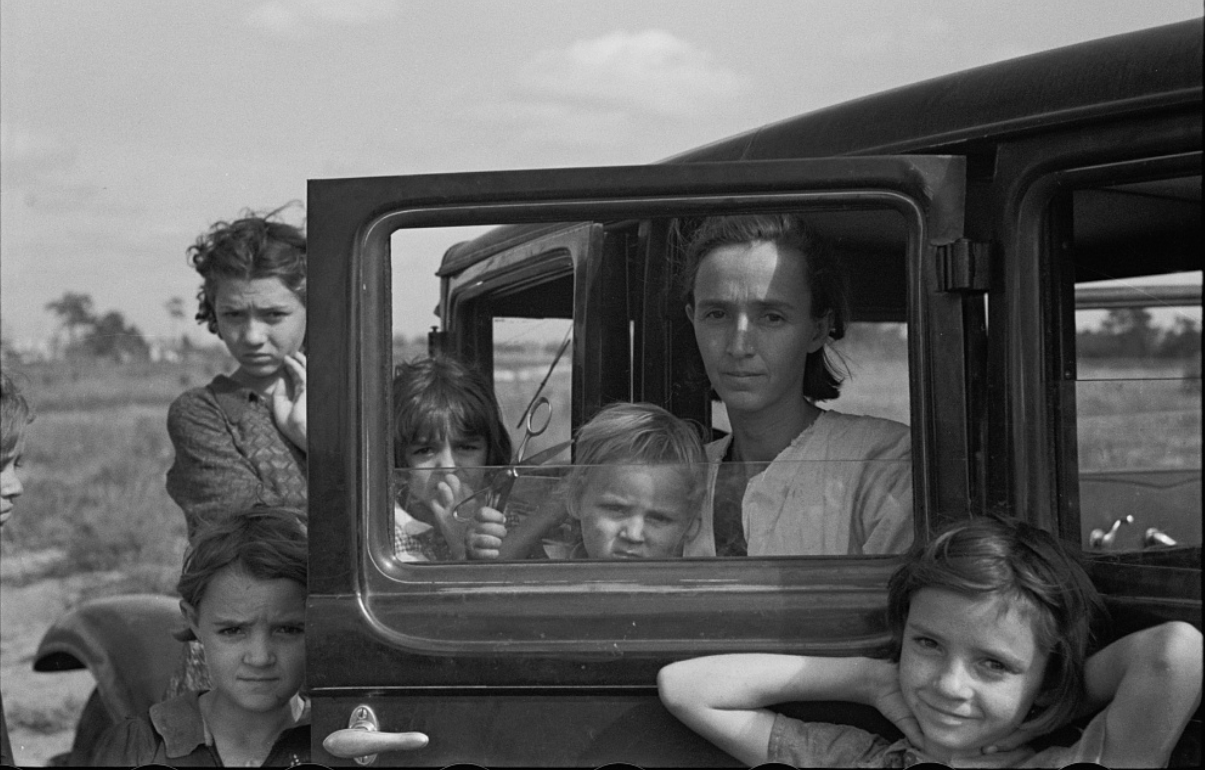
Created special for you, a video of Depression-era photography set to the famed Carter Family song, “No Depression”
My new roommate and I are sitting on our beds in hospital gowns, across from each other.
Betsy, an 85 year old Anglo lady, begins to speak.
I know what is coming, and settle in.
Betsy’s tale is one of triumph over soul-crushing extreme poverty in the early 20th century.
She was born into a dirt poor rural southern family in the 1930’s, the heart of the Great Depression.
The nation is decimated, the New Deal has not yet rolled out, and Hoover’s tariffs have been an abject failure.It is a dark time in America.
The family lurches from farm to farm across the deep south and Texas, working the fields. A step beneath sharecropper and above total vagabond, whites, blacks and Mexicans labor in these backbreaking jobs together, too poor even for segregation.
Confessional at the Toulouse Cathedral. Cathédrale Saint-Étienne de Toulouse – chapelle des reliques – Confessionnal PM31000752 Creative Commons license. Photo: Didier Descouens, 2016
All children help, from the moment they can walk. School is an occasional event. They are rooted to no place, no community. The extended family – more of a fractured clan – is flung across the south and west.
Betsy’s family crams into temporary rentals – usually a run-down shack, procured by the mostly-absent father, who shows up mainly to impregnate his wife and book their next quasi-slave labor gigs.
Mother and eight kids move from shack to shack, sometimes departing in the dead of night, because they can’t pay the rent. There is no such thing as medical care. The pregnancies continue, and when the baby comes, Betsy and her siblings deliver the child.
Against this backdrop, Betsy is the most functional one. Even now, all these years later, she exudes a down-to-earth practicality.
Then disaster strikes – her mother dies. How much can a woman’s body take, after all? The children are scattered to the winds, sent to various relatives to live. At age 12, Betsy is sent to live with the grandparents, and a new chapter, a fresh hell, begins.
Trigger warning…
THE NURSING HOME CONFESSIONAL
The family of a migratory fruit worker from Tennessee now camped in a field near the packinghouse at Winter Haven, Florida, 1937. Photo: Rothstein, Arthur, 1915-1985, United State Resettlement Administration. Library of Congress Public Domain
Each night, Betsy is required to share the bed with her grandmother.
With regularity, the grandfather climbs in, raping first the grandmother, then Betsy. This goes on for over a year.
It reminds me of a perverse variation of “droit du seigneur,” in which a lord held sexual rights over his female vassals. The absolute entitlement of it all. It’s staggering, the violence and complete destruction of norms which all too often accompanies poverty in America.
Betsy finally manages to get away when the grandfather falls ill. Barely 14 and lying about her age, she flees, providing her own food and shelter. She gravitates towards clerical work, ending up somewhere in southern California.
One day in that first year out, she doubles over in pain, passes out. She is rushed to the hospital, the first formal medical care of her life. It’s appendicitis. While still recovering from surgery, she learns the grandfather has died up north.
Righteous hatred can be a fuel, and it is thus for Betsy. She yanks out the IV tubes, dresses herself in her pre-collapse clothing, and heads immediately for the train station, an abdominal drainage tube still sticking out of her surgical wound.
She makes the hours-long trip to her grandfather’s grave site, arriving in time for the ceremony.
In front of the ragtag assembly of extended family members, Betsy marches to the graveside. In front of them all, she emphatically spits on his coffin, turns on her heel, does not look back. This is her moment of demarcation, her grand gesture, in which she severs her “then” from her “now.” With this act, she has declared to the family and universe that his abuses will not pass unmarked. His sins will not be buried with his body. And her horrific childhood will not dictate her life moving forward.
With that, Betsy begins to fully live her new life. She holds down jobs, meets a good man, marries, has a daughter. But this kind of trauma lingers, an indelible mark is left. It forged her, and it becomes fuel.
That is the heart of her life tale, told in the nursing home confessional.
A bitter-sweet monumental triumph, it is.
Betsy is a hero, no doubt.
This strong woman has accomplished the near impossible – She has lifted herself out of abject poverty and a life of abuse at a time when there were few choices or models and no such thing as social services.
All these decades later, she has chosen to share her life story with me in this sacred retelling. I recognize it for the tremendous honor it is. In this recitation, Betsy is teaching me – life goes on. Next chapters are possible. Good things happen.
You, too, will find yourself in a similar circumstance in your own journey into aging.
Your role will be to attentively receive the tale, with open ears and open heart, recognizing you have been endowed to receive and mark this sacred telling. It seems that when we carry a piece of it, the burden is eased for the teller.
“I was here. This is what happened. By speaking it aloud, I confirm it. Remember with me.”
Thank you for allowing me to share. With much love, Karen 💞🥰💞
PS: Here is your Amuse Bouche – a riveting interview with the godfather of AI and Nobel Laureate winner Geoffrey Hinton, who shares his perspective on this norm-shattering new capacity.
About this series…
Karen Strickholm had a hidden brain tumor on her pituitary gland. The tumor she didn’t know she had until she was about 50, wound up taking her health and all she had built in life. Her tumor, diagnosed in 2008, caused a tsunami of symptoms and eventually forced her into long-term care in a nursing home and a series of hospitals.
This is America, the only developed nation that does not have universal healthcare, and the only developed nation where medical debt can force you into bankruptcy.
Karen became one of the financial statistics due to her medical debt, and the fact that she couldn’t get Medicare unless she was literally penniless.
What made Karen different from many other people was her relentless optimism and belief that she was going to get better, would walk out of the nursing home to build a new life. She was smart, a good writer and she left behind a number of digital artifacts, which have been collected into this series. Karen relates, in her own words, her journey through the American healthcare system and the reality living penniless in a nursing home long term.
Karen Strickholm died 6 April 2026 in a hospital in Albuquerque, New Mexico, of sepsis and pneumonia. She was 67.
This multimedia documentary series is her story.
Medical bankruptcy
• Approximately 66.5% of non-business personal bankruptcies in the U.S. were attributed to medical reasons in 2019.
• 1 in 10 U.S. adults (10.5 million) have experienced medical bankruptcy since 2001.
• 78% of bankrupt individuals in 2022 cited medical expenses as their primary cause.
• Medical bankruptcy rates increased by 21% from 2010 to 2020, even as overall bankruptcy rates declined
• The average interest rate on medical debt from bankruptcies is 21% (2022)
https://worldmetrics.org/medical-bankruptcies-statistics/ Nursing home stats
• On any given day, more than 1.3 million individuals receive care in a nursing home or skilled nursing facility, and a total of more than 4 million receive care each year.
• 6 out of 10 residents (64%) are short-stay patients who remain in a skilled nursing facility for an average of 25 days.
• Nearly four out of 10 residents (36%) are long-stay residents. These individuals often have multiple health conditions. Their average age is 76.
• Nursing homes employ about 1.5 million people.
• Nearly 90% are women, and 60% are people of color.
• One out of every five nursing home workers is an immigrant.
• There are around 15,000 nursing homes in the United States.
• The average size of a nursing home is 109 beds.
• Medicaid covers the cost of care for nearly two out of every three residents (63%).
https://www.ahcancal.org/Data-and-Research/facts/Pages/default.aspx
Greetings, my people! It’s been a beat since you’ve heard from me – more than two years, in fact. During this time, I’ve been dancing a do-si-do with Death.
Things went horribly awry… There was paralysis, from the neck down. There was kidney failure. Massive IV antibiotics. Seizures. A distressed heart. In short, hanging on by a thread…
STILL HERE! Karen Strickholm, Albuquerque Heights Rehab & Longterm Care, 2023
So much! If you think you know my medical story, I assure you, you do not.
Until recently it was too complicated, too horrifying, too traumatizing to tell.See this brief ticktock, which lays out the journey completely for the first time.
Reconnecting with you is my first intention. Also, I’ll be sharing with you the tales of my life as a medical vagabond, a “secret shopper” of America’s convoluted medical system. This is stuff you are gonna want to know…
The secret angels and predatory devils in the healthcare world – how to tap the former, and guard yourself from the latter.
Adventures of the hoyer – a crane-like lift device that moves my body in a sling from bed to wheelchair.
Walking the edge of death – What happens when things get dire, and how to make sure people don’t write you off, just when the battle is most critical.
Up close and personal – You will rarely be alone… So many people. Roommates. Doctors. Nurses. Aides, social workers, therapists, ombudsmen, business office people, schedulers, unit managers, other sick people – many with dementia.
The darkest and best humor is found in the healthcare world. It is legendary, and ROFL funny.
From wipe-out to new beginnings – When the past has been smashed to smithereens, how does one chart a new way forward?
Thank you for joining me as I close the book on the old, and ring in the new. I can’t wait to reconnect with you, and you, and you! <3 I may be slow to respond, but I will – I’m back in the saddle. Or up on the walker, taking those first steps yet again.
Thank you for joining me on this road! ~ Karen
2023 – Recovery begins anew. At last get under care of an Infectious Disease Specialist, Am prescribed “prophylactic antibiotic therapy” – e.g. antibiotics for life. In addition to Endocrinologist, begin treatment with Pulmonologist, Nephrologist, Cardiologist, new Wound Specialists. Nerves regenerate, feeling and movement slowly returns. With physical therapy, am able to stand. For the second time in three years, have gone from completely bed bound to standing – the necessary precursor to pivoting and then truly walking. Those wretched painful wounds continue open, unable to resolve under high steroid dosing. Strength is returning
About this series…
Karen Strickholm had a hidden brain tumor on her pituitary gland. The tumor she didn’t know she had until she was about 50, wound up taking her health and all she had built in life. Her tumor, diagnosed in 2008, caused a tsunami of symptoms and eventually forced her into long-term care in a nursing home and a series of hospitals.
This is America, the only developed nation that does not have universal healthcare, and the only developed nation where medical debt can force you into bankruptcy.
Karen became one of the financial statistics due to her medical debt, and the fact that she couldn’t get Medicare unless she was literally penniless.
What made Karen different from many other people was her relentless optimism and belief that she was going to get better, would walk out of the nursing home to build a new life. She was smart, a good writer and she left behind a number of digital artifacts, which have been collected into this series. Karen relates, in her own words, her journey through the American healthcare system and the reality living penniless in a nursing home long term.
Karen Strickholm died 6 April 2026 in a hospital in Albuquerque, New Mexico, of sepsis and pneumonia. She was 67.
This multimedia documentary series is her story.
Medical bankruptcy
• Approximately 66.5% of non-business personal bankruptcies in the U.S. were attributed to medical reasons in 2019.
• 1 in 10 U.S. adults (10.5 million) have experienced medical bankruptcy since 2001.
• 78% of bankrupt individuals in 2022 cited medical expenses as their primary cause.
• Medical bankruptcy rates increased by 21% from 2010 to 2020, even as overall bankruptcy rates declined
• The average interest rate on medical debt from bankruptcies is 21% (2022) https://worldmetrics.org/medical-bankruptcies-statistics/ Nursing home stats
• On any given day, more than 1.3 million individuals receive care in a nursing home or skilled nursing facility, and a total of more than 4 million receive care each year.
• 6 out of 10 residents (64%) are short-stay patients who remain in a skilled nursing facility for an average of 25 days.
• Nearly four out of 10 residents (36%) are long-stay residents. These individuals often have multiple health conditions. Their average age is 76.
• Nursing homes employ about 1.5 million people.
• Nearly 90% are women, and 60% are people of color.
• One out of every five nursing home workers is an immigrant.
• There are around 15,000 nursing homes in the United States.
• The average size of a nursing home is 109 beds.
• Medicaid covers the cost of care for nearly two out of every three residents (63%). https://www.ahcancal.org/Data-and-Research/facts/Pages/default.aspx
Fall 2020 through 2021 –Long Covid, coupled with more severe endocrine/TBI symptoms, grinds on – An addled brain, micro-seizures, double vision, loss of bowel control, severe headache, multiple re-hospitalizations (bouncing from rehab to hospital to rehab, etc.) for cellulitis, pneumonia, UTIs and extreme sinus infections. Massive IV administration of triple antibiotics, steroids, plasma, iron, fluids, via PICC line from arm to heart to deliver. Completely bed-bound, unable to stand. Plus, trapped in Texas <ugh> since NM governor had closed borders due to pandemic.
“The COVID ran through here like wildfire.” So says Nurse Kim.
Thirty four residents at this small facility (a specialty wound care hospital in El Paso, Texas) died in December.
“We gave them morphine for the pain, and Ativan to keep them calm,” she shared. “Sometimes we were able to sit with them until they passed.”
Karen Strickholm fighting the good fight.
I don’t think we have, as a nation, even begun to digest our shared trauma – a pandemic, an insurgency, and a recession matched in scope only by the Great Depression. Not to mention, Texas.
It’s been a lot, hasn’t it?!! We are making it through though. We are certainly making it through. And, we should all be proud of that. Phew!
So now what? Clean up the wreckage. Reconstruct. Re-invent. We can do it. We are already doing it.
I know I am. Bringing this body along, steering it to strength and health, inch by inch, day by day.
Progress is now undeniable… I will walk again. Now, it is only a matter of hard work and time.
How People Die.
“It’s a pattern…”
(Transcript excerpt) hello wow i’m here in the rehab center uh things are moving along i wanted to share a little bit with you about some stuff that the um therapists the physical therapist told me about residents here and when they die and they said it’s happened so often that it’s just a pattern that they know now how it goes is that someone decides and states that they’re just done they’re tired they’ve raised their family they’ve lived a good life and they’re tired and they’re done and within a couple of days they stop eating and then often they start having vivid visits with people who are deceased like their grandmother and they’re 90 you know or a deceased child and they tell the therapists about it and they’re so happy they have this wonderful visits with people that they love and then they get this far away look in their eyes like they’re looking at you but they’re really not
they’re kind of looking at a space in between in the air and then after that they die they go to sleep and they die so death is a process and i think that’s so interesting
i however have no plans to die not at the moment i am fighting hard for my life i’m fighting hard for my mobility learning to stand again
it’s really hard and it’s really taking some timei gotta confess but i am making progress and um hopefully within the next one to two months i’ll be able to walk the 20 some odd feet from this bed to the toilet and back again.…
that’s how i’m doing i’m looking forward to accomplishing walking again because then i can go home and live on my own again and i just can’t wait you guys i’m so excited to be able to do that probably by may or june i’ll be able to go home
so that’s my timeline that’s how i’m doing i hope you enjoy the poem i posted below and from dylan Thomas
i guess that’s it i hope you’re doing great much love
bye bye
May this update find you blessed in this new year. Planting seeds for the future, living fully in the present. Dylan Thomas said it best:
“Do not go gentle into that good night,
Old age should burn and rave at close of day;
Rage, rage against the dying of the light.”
Better Days. (Posted to Karen’s Mail Chimp feed 4 January 2021)
Heya 2020, don’t let the door hit you in the ass on the way out. I awoke New Year’s Day to this One Republic tune on repeat in my head, then found this inspiring video (above) and just had to share it with you. May 2021 bring blessings upon blessings in all our lives. <3 K.
Oh, I know that there’ll be better days
Oh, that sunshine ’bout to come my way
May we never ever shed another tear for today
‘Cause oh, I know that there’ll be better days
(full lyrics here)
********************************* About this series…
Karen Strickholm had a hidden brain tumor on her pituitary gland. The tumor she didn’t know she had until she was about 50, wound up taking her health and all she had built in life. Her tumor, diagnosed in 2008, caused a tsunami of symptoms and eventually forced her into long-term care in a nursing home and a series of hospitals.
This is America, the only developed nation that does not have universal healthcare, and the only developed nation where medical debt can force you into bankruptcy.
Karen became one of the financial statistics due to her medical debt, and the fact that she couldn’t get Medicare unless she was literally penniless.
What made Karen different from many other people was her relentless optimism and belief that she was going to get better, would walk out of the nursing home to build a new life. She was smart, a good writer and she left behind a number of digital artifacts, which have been collected into this series. Karen relates, in her own words, her journey through the American healthcare system and the reality living penniless in a nursing home long term.
Karen Strickholm died 6 April 2026 in a hospital in Albuquerque, New Mexico, of sepsis and pneumonia. She was 67.
This multimedia documentary series is her story.
Medical bankruptcy
• Approximately 66.5% of non-business personal bankruptcies in the U.S. were attributed to medical reasons in 2019.
• 1 in 10 U.S. adults (10.5 million) have experienced medical bankruptcy since 2001.
• 78% of bankrupt individuals in 2022 cited medical expenses as their primary cause.
• Medical bankruptcy rates increased by 21% from 2010 to 2020, even as overall bankruptcy rates declined
• The average interest rate on medical debt from bankruptcies is 21% (2022)
https://worldmetrics.org/medical-bankruptcies-statistics/ Nursing home stats
• On any given day, more than 1.3 million individuals receive care in a nursing home or skilled nursing facility, and a total of more than 4 million receive care each year.
• 6 out of 10 residents (64%) are short-stay patients who remain in a skilled nursing facility for an average of 25 days.
• Nearly four out of 10 residents (36%) are long-stay residents. These individuals often have multiple health conditions. Their average age is 76.
• Nursing homes employ about 1.5 million people.
• Nearly 90% are women, and 60% are people of color.
• One out of every five nursing home workers is an immigrant.
• There are around 15,000 nursing homes in the United States.
• The average size of a nursing home is 109 beds.
• Medicaid covers the cost of care for nearly two out of every three residents (63%).
https://www.ahcancal.org/Data-and-Research/facts/Pages/default.aspx
Made It Through Long Covid-19! A Bed In Roswell 2020-10-18
By Karen Strickholm
Fall 2020 through 2021 – Long Covid, coupled with more severe endocrine/TBI symptoms, grinds on – An addled brain, micro-seizures, double vision, loss of bowel control, severe headache, multiple re-hospitalizations (bouncing from rehab to hospital to rehab, etc.) for cellulitis, pneumonia, UTIs and extreme sinus infections. Massive IV administration of triple antibiotics, steroids, plasma, iron, fluids, via PICC line from arm to heart to deliver. Completely bed-bound, unable to stand. Plus, trapped in Texas <ugh> since NM governor had closed borders due to pandemic.
Late 2021 –Moved via ambulance to a bed that finally opens in Roswell, NM, as pandemic ebbs. Start physical therapy, regain ability to sit upright, stand, pivot, and take a few steps. However, severe infections continue, each bout triggering heart into Afib and requiring several weeks’ stay in hospital acute care units. Kidneys crash. More massive drugs infused.
About this series…
Karen Strickholm had a hidden brain tumor on her pituitary gland. The tumor she didn’t know she had until she was about 50, wound up taking her health and all she had built in life. Her tumor, diagnosed in 2008, caused a tsunami of symptoms and eventually forced her into long-term care in a nursing home and a series of hospitals.
This is America, the only developed nation that does not have universal healthcare, and the only developed nation where medical debt can force you into bankruptcy.
Karen became one of the financial statistics due to her medical debt, and the fact that she couldn’t get Medicare unless she was literally penniless.
What made Karen different from many other people was her relentless optimism and belief that she was going to get better, would walk out of the nursing home to build a new life. She was smart, a good writer and she left behind a number of digital artifacts, which have been collected into this series. Karen relates, in her own words, her journey through the American healthcare system and the reality living penniless in a nursing home long term.
Karen Strickholm died 6 April 2026 in a hospital in Albuquerque, New Mexico, of sepsis and pneumonia. She was 67.
This multimedia documentary series is her story.
Medical bankruptcy
• Approximately 66.5% of non-business personal bankruptcies in the U.S. were attributed to medical reasons in 2019.
• 1 in 10 U.S. adults (10.5 million) have experienced medical bankruptcy since 2001.
• 78% of bankrupt individuals in 2022 cited medical expenses as their primary cause.
• Medical bankruptcy rates increased by 21% from 2010 to 2020, even as overall bankruptcy rates declined
• The average interest rate on medical debt from bankruptcies is 21% (2022) https://worldmetrics.org/medical-bankruptcies-statistics/ Nursing home stats
• On any given day, more than 1.3 million individuals receive care in a nursing home or skilled nursing facility, and a total of more than 4 million receive care each year.
• 6 out of 10 residents (64%) are short-stay patients who remain in a skilled nursing facility for an average of 25 days.
• Nearly four out of 10 residents (36%) are long-stay residents. These individuals often have multiple health conditions. Their average age is 76.
• Nursing homes employ about 1.5 million people.
• Nearly 90% are women, and 60% are people of color.
• One out of every five nursing home workers is an immigrant.
• There are around 15,000 nursing homes in the United States.
• The average size of a nursing home is 109 beds.
• Medicaid covers the cost of care for nearly two out of every three residents (63%). https://www.ahcancal.org/Data-and-Research/facts/Pages/default.aspx
Death On The Covid-19 Quarantine Ward, El Paso 2020-08-25
By Karen Strickholm
August 2020 – “Contracted Covid-19. Bad. Sent to isolation COVID ward in El Paso (Texas) hospital, during that city’s peak pandemic moment – you may remember it in the national news. Spent one month in COVID acute care on 15 liters oxygen, mobile tractor trailer morgues out back, FEMA tents crammed into overflow spaces, Code Blue called near daily all around me, on bi-pap to breath. It’s touch and go. Too weak to stand, too weak to walk. In-dwelling foley installed, remaining in place for next three years.”
Aug 25, 2020 KINDRED HOSPITAL EL PASO
Out Of The Ward, Onward
Karen Strickholm, KINDRED HOSPITAL EL PASO Out Of The Ward, Onward
so what’s been going on is i almost died of covid
i got really sick and from the last time i updated everybody i just uh i don’t even know where i left, things off
i had um pneumonia and septic shock and that was about 12 weeks ago it put me in the hospital and then um was recovering from that pretty well actually and was in a specialty hospital for my wounds which were being treated aggressively and really responding, and while i was there i got coded and i was transferred into quarantine at the hospital in el paso and from there um i went downhill very fast and uh almost died
i was on 12 liters of oxygen and pretty critical i’m making a video i’ll talk to you later and um and that’s what happened
so while i was in there it was very intense you could hear the other patients but you knew about them but you never see them and you never meet them
so i hear about them from the nurses so for example there was one man who was 91 and he could only talk to his daughters on facetime on a on a you know tablet that the nurse had to hold for him and um i i was you know there when he coded next door to me and heard him die
i mean basically heard him code not die but about two weeks in and there was another woman who was about my age she was struggling pretty hard and they finally decided to put her on a ventilator and as they were moving her to the icu she coded and i heard her die
also it was really intense and i myself was fairly critical luckily at the time when they decided ventilators were not the best thing um so i didn’t have to do that but i was on 12 liters of oxygen which is crazy
i had pulmonary edema and this is all following having you know septic shock and pneumonia for christ’s sake
so the dying part is getting really old i’m now on all kinds of drip antibiotics you can see that that’s the drip i’m in a step down hospital so it is a hospital it’s for acute care you can see the wall with all this stuff on it and uh it’s my bed and my strength is beyond gone
I today had physical therapy and i could stand for um 60 seconds was my max so it’s all a pill from there strength wise
i’m glad i have the opportunity to update everybody and i’m sick of this almost dying it’s getting so old but i made it through and and the thing that a lot of people say to me now is congratulations on making it because you know what a lot of people don’t and this did not need to be i did not need to get covid
nobody did you know this is just massive public health mismanagement this is what this is
so everybody stay safe out there wear your masks please for yourself and for others and know that this is a serious life-threatening virus it’s not just your lungs even though it you know definitely impacts the lungs
it affects the whole body and um recovery can be long and difficult um i don’t know what mine’s gonna look like but uh onward right
you just have no friggin idea how many medical expenses there are when you’re really sick it’s just it’s friggin endless man all right everybody take care i will talk to you soon
About this series…
Karen Strickholm had a hidden brain tumor on her pituitary gland. The tumor she didn’t know she had until she was about 50, wound up taking her health and all she had built in life. Her tumor, diagnosed in 2008, caused a tsunami of symptoms and eventually forced her into long-term care in a nursing home and a series of hospitals.
This is America, the only developed nation that does not have universal healthcare, and the only developed nation where medical debt can force you into bankruptcy.
Karen became one of the financial statistics due to her medical debt, and the fact that she couldn’t get Medicare unless she was literally penniless.
What made Karen different from many other people was her relentless optimism and belief that she was going to get better, would walk out of the nursing home to build a new life. She was smart, a good writer and she left behind a number of digital artifacts, which have been collected into this series. Karen relates, in her own words, her journey through the American healthcare system and the reality living penniless in a nursing home long term.
Karen Strickholm died 6 April 2026 in a hospital in Albuquerque, New Mexico, of sepsis and pneumonia. She was 67.
This multimedia documentary series is her story.
Medical bankruptcy
• Approximately 66.5% of non-business personal bankruptcies in the U.S. were attributed to medical reasons in 2019.
• 1 in 10 U.S. adults (10.5 million) have experienced medical bankruptcy since 2001.
• 78% of bankrupt individuals in 2022 cited medical expenses as their primary cause.
• Medical bankruptcy rates increased by 21% from 2010 to 2020, even as overall bankruptcy rates declined
• The average interest rate on medical debt from bankruptcies is 21% (2022) https://worldmetrics.org/medical-bankruptcies-statistics/ Nursing home stats
• On any given day, more than 1.3 million individuals receive care in a nursing home or skilled nursing facility, and a total of more than 4 million receive care each year.
• 6 out of 10 residents (64%) are short-stay patients who remain in a skilled nursing facility for an average of 25 days.
• Nearly four out of 10 residents (36%) are long-stay residents. These individuals often have multiple health conditions. Their average age is 76.
• Nursing homes employ about 1.5 million people.
• Nearly 90% are women, and 60% are people of color.
• One out of every five nursing home workers is an immigrant.
• There are around 15,000 nursing homes in the United States.
• The average size of a nursing home is 109 beds.
• Medicaid covers the cost of care for nearly two out of every three residents (63%). https://www.ahcancal.org/Data-and-Research/facts/Pages/default.aspx
Aug 2, 2020 THE HOSPITALS OF PROVIDENCE MEMORIAL CAMPUS
August 2020 – “Contracted Covid-19. Bad. Sent to isolation COVID ward in El Paso (Texas) hospital, during that city’s peak pandemic moment – you may remember it in the national news. Spent one month in COVID acute care on 15 liters oxygen, mobile tractor trailer morgues out back, FEMA tents crammed into overflow spaces, Code Blue called near daily all around me, on bi-pap to breath. It’s touch and go. Too weak to stand, too weak to walk. In-dwelling foley installed, remaining in place for next three years.”
I have Covid-19……and all I want is sleep sleep sleep…
I have Covid-19… Aug 2, 2020 THE HOSPITALS OF PROVIDENCE MEMORIAL CAMPUS
Hello well i have coded people i have the rona i’ve been transferred to a hospital here in el paso i’m on a covet isolation ward this experience just gets more and more and more evolved i guess anyway i’m still recovering from septic shock and from pneumonia and now i have coveted so i’m becoming more and more symptomatic and the infectious disease doctor said the next three days for me are critical so i’m just resting um they started me on rendezvous which they’re now using earlier on in the coveted infection arc they’re finding out new things every day i mean the protocols here are changing just constantly i don’t know if you can see these red eyes i have but this is another coveted symptom is like a conjunctivitis kind of red eye but it’s just the lids swollen and stuff look for that to be added to the list of symptoms so i have the stomachache sore throat chills achy fatigue oh that stuff i just crashed so hard i’ve just somebody was doing something and i said i have to lay down and i heard someone say can i put a blanket on you and then the next thing i know it was a couple of hours later so um i’m a fighter and i’m fighting and that’s what’s up with me um what else did i want to share this is just an incredible experience you guys
About this series…
Karen Strickholm had a hidden brain tumor on pituitary gland. The tumor she didn’t know she had until she was about 50, wound up taking her health and all she had built in life. Her tumor, diagnosed in 2008, caused a tsunami of symptoms and eventually forced her into long-term care in a nursing home and a series of hospitals.
This is America, the only developed nation that does not have universal healthcare, and the only developed nation where medical debt can force you into bankruptcy.
Karen became one of the financial statistics due to her medical debt, and the fact that she couldn’t get Medicare unless she was literally penniless.
What made Karen different from many other people was her relentless optimism and belief that she was going to get better, would walk out of the nursing home to build a new life. She was smart, a good writer and she left behind a number of digital artifacts, which have been collected into this series. Karen relates, in her own words, her journey through the American healthcare system and the reality living penniless in a nursing home long term.
Karen Strickholm died 6 April 2026 in a hospital in Albuquerque, New Mexico, of sepsis and pneumonia. She was 67.
This multimedia documentary series is her story.
Medical bankruptcy
• Approximately 66.5% of non-business personal bankruptcies in the U.S. were attributed to medical reasons in 2019.
• 1 in 10 U.S. adults (10.5 million) have experienced medical bankruptcy since 2001.
• 78% of bankrupt individuals in 2022 cited medical expenses as their primary cause.
• Medical bankruptcy rates increased by 21% from 2010 to 2020, even as overall bankruptcy rates declined
• The average interest rate on medical debt from bankruptcies is 21% (2022)
https://worldmetrics.org/medical-bankruptcies-statistics/ Nursing home stats
• On any given day, more than 1.3 million individuals receive care in a nursing home or skilled nursing facility, and a total of more than 4 million receive care each year.
• 6 out of 10 residents (64%) are short-stay patients who remain in a skilled nursing facility for an average of 25 days.
• Nearly four out of 10 residents (36%) are long-stay residents. These individuals often have multiple health conditions. Their average age is 76.
• Nursing homes employ about 1.5 million people.
• Nearly 90% are women, and 60% are people of color.
• One out of every five nursing home workers is an immigrant.
• There are around 15,000 nursing homes in the United States.
• The average size of a nursing home is 109 beds.
• Medicaid covers the cost of care for nearly two out of every three residents (63%).
https://www.ahcancal.org/Data-and-Research/facts/Pages/default.aspx
Karen Strickholm: A Will To Live When Health Issues Take Everything Until 6 April 2026, Karen Strickholm was living, knitting and sometimes writing from a place no one wants to be, but about 25 percent of us will wind up: …Continue reading →
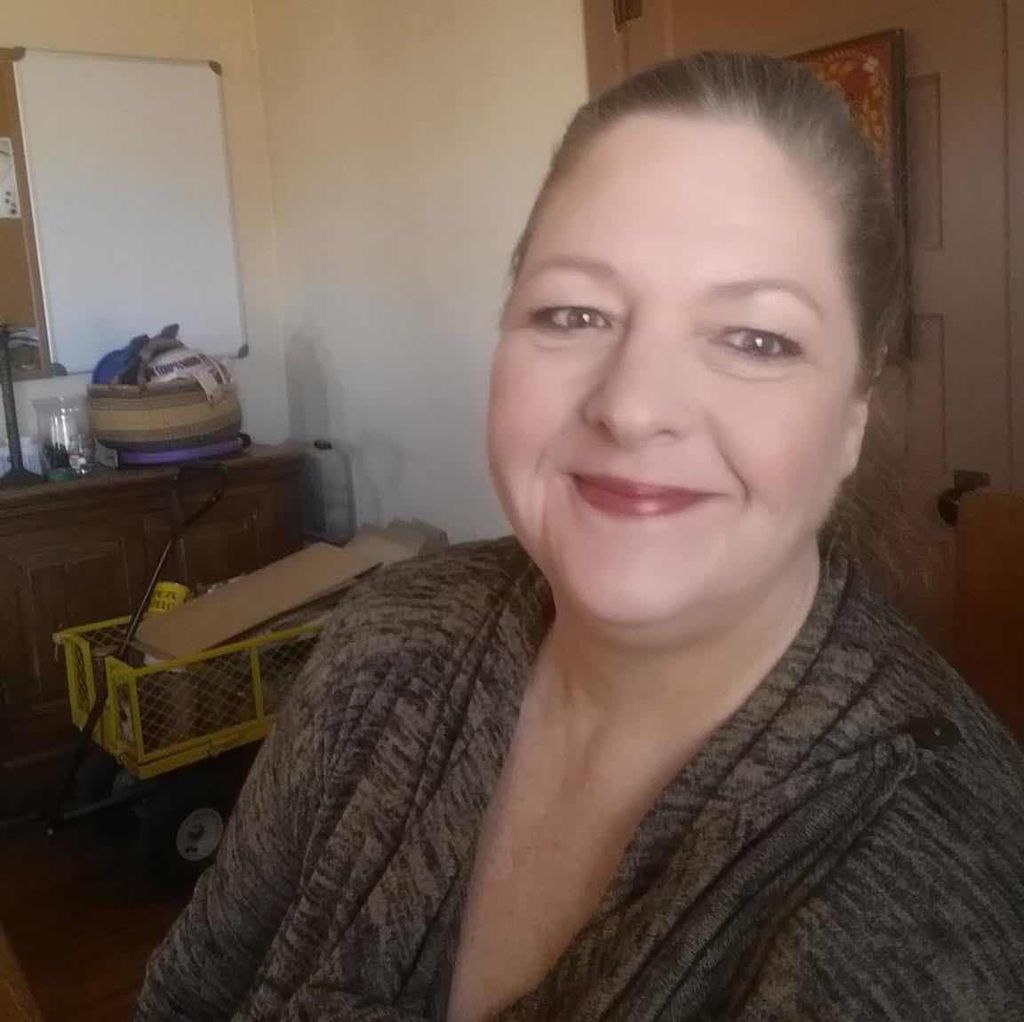
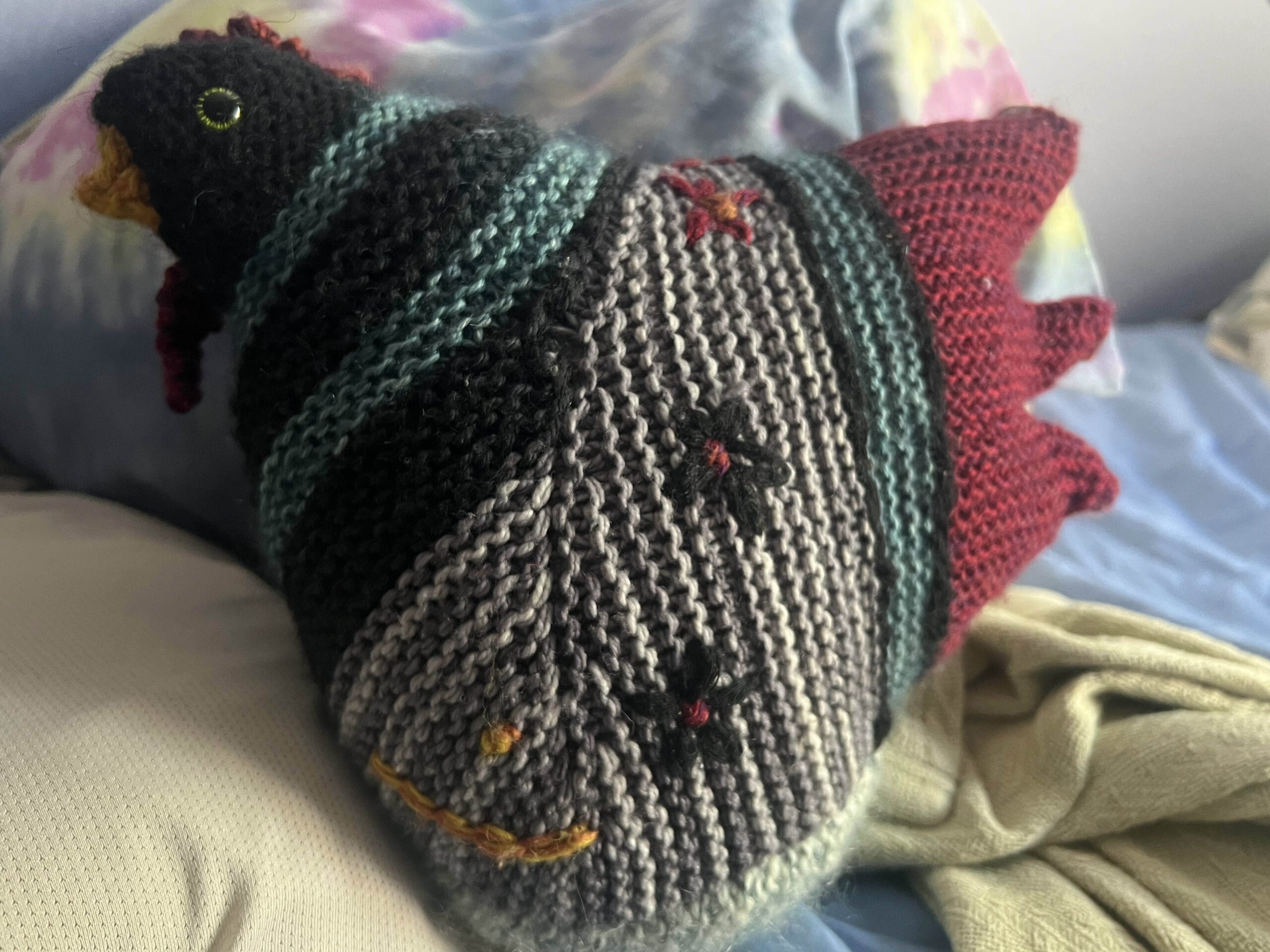


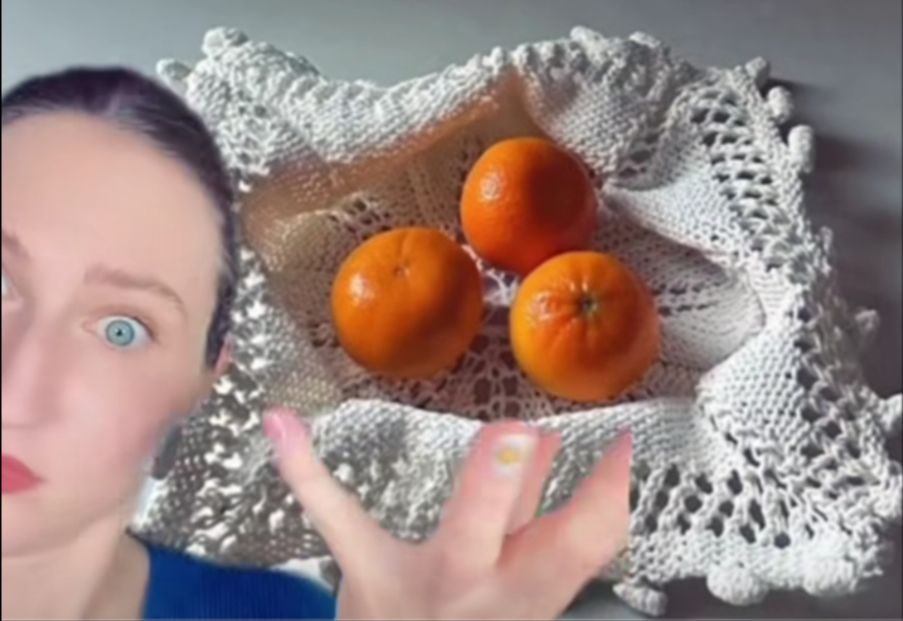

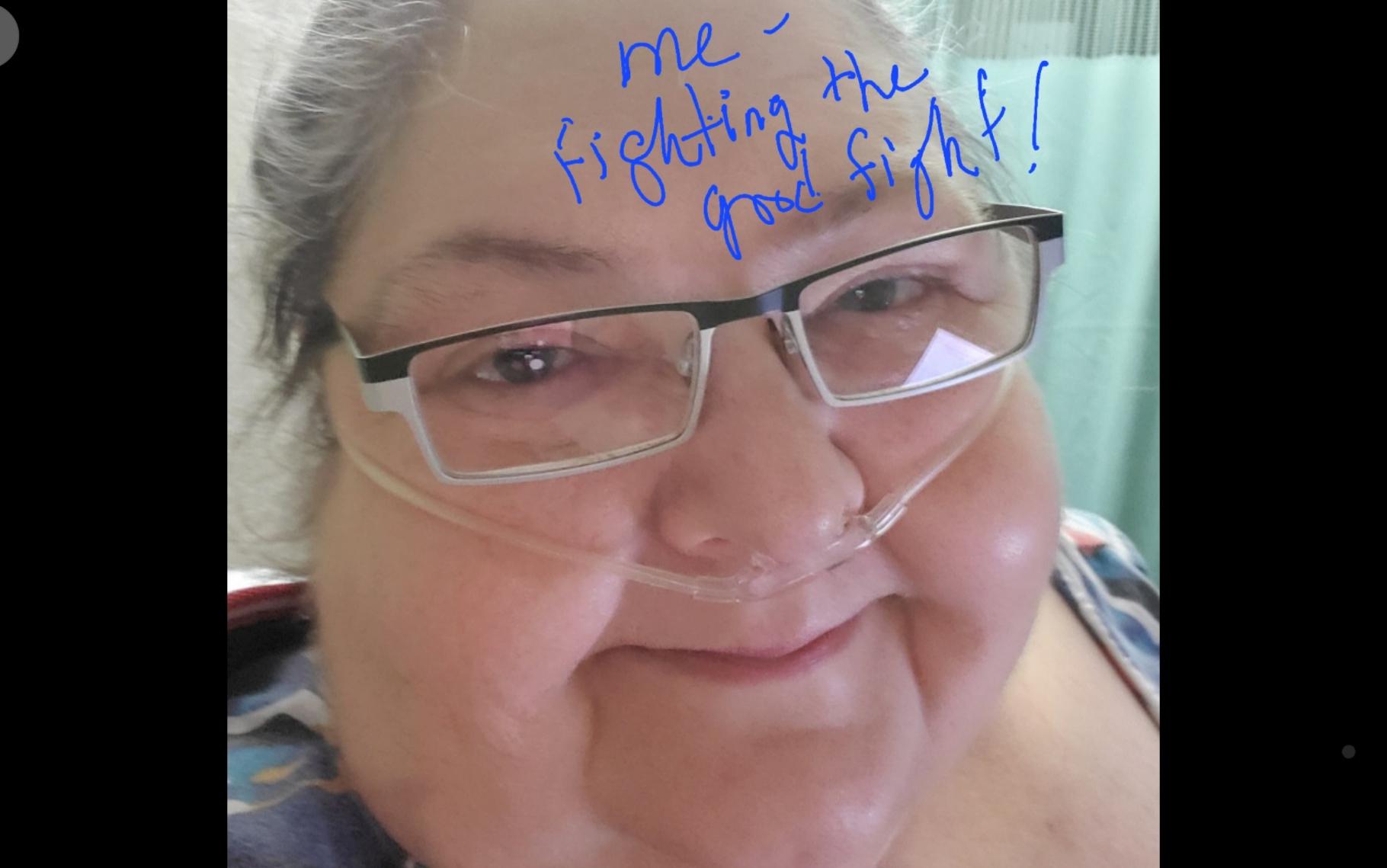
 A meme from the great bard, Leonard Cohen


 (Shot of me above with steroid-bloated chipmunk face)